

 Mary Oliver, keen observer of nature and poet extraordinaire, once wrote about the power of trees to teach and comfort: "When I am among the trees,/ especially the willows and the honey locust,/ equally the beech, the oaks and the pines,/ they give off such hints of gladness./ I would almost say that they save me, and daily."
These words, from "When I Am Among the Trees," included in one of her final anthologies, Devotions: The Selected Poems of Mary Oliver, came back to me recently.  I was interviewing botanist and plant biochemist Beronda Montgomery, author of When Trees Testify: Science, Wisdom, History, and America's Black Botanical Legacy. Montgomery explores the history of Black botany in United States history by grounding each chapter of her insightful book in a different species of tree. It's not always an easy history, so rooted in the bleak and violent realities of chattel slavery and the racism that persisted long after abolition, but it's one Montgomery explores with candor and wisdom, revealing the many lessons trees can teach us about history and memory, community and interconnectivity, identity and self.
 In Tree Story: The History of the World Written in Rings, Valerie Trouet looks not at the narratives surrounding particular trees for historical knowledge, but at the rings found within trees' trunks. Trouet contends that these rings harbor codes that reveal histories of climate change, linking those climate shifts to major historical events going back thousands of years (such as the fall of the Roman Empire, or the outbreaks of global pandemics).
  Likewise, Evergreen: The Trees that Shaped America explores how deeply interrelated they are with history, particularly focusing on how trees (and the lumber they provide) shaped the land that became the United States. And environmental journalist Fred Pearce makes the case for reforestation--particularly given how much woodland has been destroyed by historical and modern-day overdevelopment--in A Trillion Trees: Restoring Our Forests by Trusting in Nature.
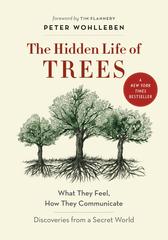 Moreover, The Hidden Life of Trees: What They Feel, How They Communicate by German forest ranger Peter Wohlleben urges an expanded role in human care of trees and forests, calling for trees to be recognized as sentient beings with rights and memories and stories to tell. Trees, Wohlleben argues, with their roots intentionally tangled together beneath the ground, are not commodities, but rather are wise and sturdy teachers of interconnectedness. (Quotable passages and particular gems from this popular tome have also been collected in a companion book, The Wisdom of the Hidden Life of Trees, and depicted with beautiful artwork in The Hidden Life of Trees: A Graphic Adaptation.)
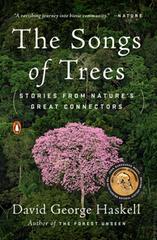 David George Haskell (The Forest Unseen) similarly studies this interconnectedness in lyrical essays about trees and their lessons of symbiosis in The Songs of Trees: Stories from Nature's Greatest Connectors, examining how they interact not only with humans but also with the flora and fauna that surround them.
 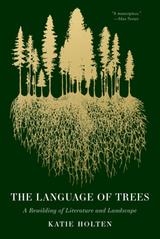 And in The Language of Trees: A Rewilding of Literature and Landscape, author Katie Holten uses a custom-made arboreal alphabet, to translate various bits of writing (essays, poems, aphorisms) from dozens contributors into a literary, visually stunning account of trees' interactions with our human world.
There's a deep appreciation for nature and its many lessons in all of these books, with calls to recognize the ways the natural world maintains records--both literally and figuratively--of what occurs within and around it. But it can feel overwhelming to begin applying those same lessons in the woods of our world. When I asked her about where one might start listening to trees, Montgomery encourages me (and others) to start where we already are. "Know the trees in your yard," she said. "Know the trees in your neighborhood. These are the trees you're living with every day. These are the trees that are capturing your breath."
And so I wonder: What breaths might the trees out your window be capturing today? And what might those same trees share back, if you take the time to sit and listen? Mary Oliver would tell us: " 'It's simple,' they say,/ 'and you too have come/ into the world to do this, to go easy, to be filled/ with light, and to shine.' " --Kerry McHugh, freelance reviewer