

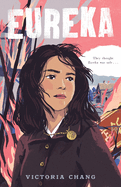
In Eureka, a melodic, transportive middle-grade novel-in-verse, Victoria Chang (Love, Love) adeptly depicts the harrowing experience of Chinese Americans in 1880s California.
It's November 1884, and violence and racism against Chinese people is rising in San Francisco. "You/ must/ go," 12-year-old Mei Mei is told by her parents, who worry the brokers to whom they owe money will kidnap Mei Mei and sell her into slavery. In San Francisco, Mei Mei isn't allowed to attend school "with the American kids," but when her parents send her north to live with family in Eureka, they tell her a "judge just said/ schools must let Chinese/ kids... go to school with/ the white kids." Instead, when Mei Mei arrives, she's ushered to a rich white family's house, and every day, she's "cutting vegetables./ Rolling dough./ Mixing flour./ Stirring soups./ Cleaning the floor./ Repeat." Mei Mei is ecstatic when the daughter of the house offers to secretly teach her to read English, but anti-Chinese sentiment increases in Eureka and threatens to dash Mei Mei's hopes.
Chang effortlessly employs her poetic prowess to tell a well-balanced story of childhood innocence and horrible acts. Her enticing formatting renders beautiful visuals (such as Mei Mei's mother's tears forming a teardrop) and evokes strong emotional responses. Chang's word choices express lovely imagery: "Her words flood out/ like a river and I am/ just a boat floating." Themes of freedom, found family, and hope are all featured in this heartbreaking yet stirring story of survival. Back matter includes an author's note about the Chinese Exclusion Act, cultural facts, and additional resources. --Lana Barnes, freelance reviewer and proofreader