

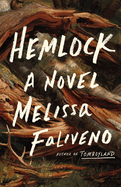
A return to her family's isolated cabin in the woods of Wisconsin leaves a woman unmoored and profoundly altered in Hemlock, a queer rural gothic exploration of addiction and heritage by Melissa Faliveno (Tomboyland).
Sam plans to fix up the cabin, named Hemlock by her father, and make a quick sale of it. She has a cat and a long-term boyfriend in Brooklyn, and she told them both she'd be gone only a couple of weeks. But a dusty six-pack she discovers in the cabin's basement puts an end to 10 months of sobriety, and while she sits on the porch one evening, a doe speaks to her in the voice of her vanished mother.
Using the remote landscape to its full potential and embracing the equally threatening and comforting possibilities of country life, Faliveno creates an air of menace and instability as Sam seems to simultaneously find and lose herself. Far from her straight-passing life, her body begins to change, becoming something more androgynous or possibly feral. Her sense of time begins to slip, and maybe her sense of reality does too, filling the novel with a dreamlike quality that leaves open the questions of what is real and what is hallucination. By returning to her roots, Sam may discover who she is meant to be or find herself doomed to repeat her mother's fate. Her battles with sinister forces, internal and external, are a powerful depiction of the struggle to escape the generational cycles of addiction that ground Hemlock's eerie sense of the uncanny. --Kristen Allen-Vogel, information services librarian at Dayton Metro Library