

|
|
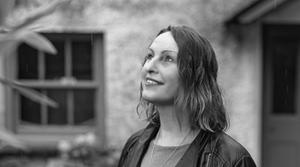
| Polly Atkin | |
Polly Atkin lives in Grasmere, in the English Lake District, and is co-owner of the historic independent bookshop Sam Read Bookseller. She writes poetry (Basic Nest Architecture; Much with Body) and nonfiction (Recovering Dorothy; Some of Us Just Fall). She writes and talks about living with chronic illness, disability and the environment, living in a rural place, and, as a disabled person, access to nature and to the arts. In The Company of Owls (Milkweed; reviewed in this issue), she considers solitude, companionship, and the natural world through the lens of some very special neighbors.
Were you always drawn to owls?
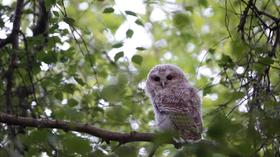
Yes! I am a child of the '80s, so I grew up with lots of fictional owls, like the mechanical owl from Clash of the Titans who I absolutely adored. We had owls that would call from these very large, old trees where I grew up, although I didn't see them often. Athena's owl was the symbol of my school when I was seven, and we got a little badge with a stylized owl face on it. They were a presence in my life.
 At what point in your owl observations did you realize you were working on a book?
Very late on. The book became a book through amazing happenstance. It was one of those beautiful coincidences that can only happen when you've been in an industry for a while.
There are poems about owls in all of my collections, so I've been writing about owls for a long time. My agent Caro [Clarke] was at the London Book Fair the year after my book Some of Us Just Fall came out, at the next table to Sarah Rigby, the editor at Elliott & Thompson. Sarah came back from a break saying, "I heard someone talking about buying a book called The Solitude of Owls, and I'm really jealous. I wish I'd bought that book!" And eventually they realized she'd misheard, and that book didn't exist at all. But Caro thought about my owls and said, actually, I think I could get you that book if you want it.
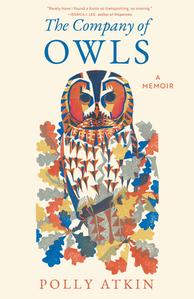 So I had this amazing e-mail from Caro saying, listen, you know those owls you've been writing poems about, would you write a book about them? I said, YES! Yes please! Nothing like that has ever happened in my writing life before, that someone's said, here, I'll give you a chunk of money to write about that thing you're already writing about.
None of us have any idea what she'd misheard in the first place.
As a writer of both poetry and prose, is it always clear which is called for?
I write my prose in a similar way to how I write poetry. I think very hard about every word. That sounds patronizing, like obviously other writers don't! But the rhythm and the syntax is as important to me in prose as it is in poetry. I have to wait for the right way to say something. For everything I write, 90% of the time is thinking and percolating time, and 10% is the actual writing down. It's very voice driven.
A poem is much more open. You can leave things dangling; the white space makes a lot of the meaning. I used to say to students: so much of the poem is what the reader brings to it. It's a drink that you need to dilute. The poem is a really concentrated flavor, and the reader brings the water that makes it drinkable. All of that happens in space on the page, and how those images and metaphors move from person to person. This happens with prose as well, but in a different, more truncated way.
 How does poetry influence your prose?
So much of poetry is about attention to what's around us. Williams Wordsworth says poetry is about having a watchful heart and a keen eye and ear. You're listening and observing what's around you, but you're also seeing beyond that. In The Prelude, he says poets and prophets are similar because they both see the unseen. That art of noticing is at the core of both poetry and prose for me.
The art of questioning too. The prose I'm interested in is open: it asks questions, raises ideas, and doesn't necessarily tell you an answer. Writing is a moving toward understanding. That's why I do it, and I'm trying to communicate that to other people, but I have to learn something too or it seems dead to me, kind of flat. That fundamental underlay of what's happening with poetry is always happening for me with prose as well.
How has owning a bookstore changed your relationship with writing (or reading)?
Oh my goodness! To see people being enthusiastic about books. We're very lucky with our shop. It's been there since 1887, right in the center of Grasmere, where we have footfall all year round. People visit from around the world. Some have a long history with the shop, whose grandparents brought them because the grandparents shopped there. You get this amazing sense of the reading public, and I love that. All these different people coming in, excited about books--I'm getting a bit teary just thinking about it. So much of the time we're told people don't read anymore, especially young people, but what I see in the shop is all these young people come in, and they're thrilled. They buy all sorts of different books; you can never guess what they will buy off of what they look like. Seeing that side of things is so heartening.
What do you wish more people knew about owls?
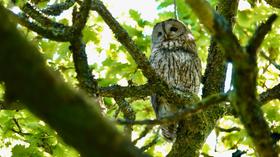
They are really loving. That's the thing that struck me watching them. We often think about predators as having less care, less empathy. I think particularly birds of prey we don't think of as family animals. Seeing the owlets care for each other, and the parents care for them, was just amazing.
There's a farm in Yorkshire with all this owl habitat, and owl cams in the nests, and the owner had a pair of owls that lost their chicks. But somebody gave him some orphaned owlets, and he popped them in the nest, and they just went: oh! Look! A chick! And now every year he ends up with orphaned owlets and he pops them in with their chicks and the parents go, OMG! Another owlet! This is amazing! They're so happy to accept them. It's not just red in tooth and claw. There are lots of examples of care and cooperation. --Julia Kastner, blogger at pagesofjulia