

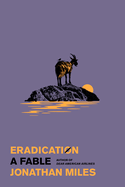
Who wouldn't take a job that involves "saving the world"? Adi, the antihero of Jonathan Miles's powerful fourth novel, Eradication, is drawn to the job listing not just for the noble mission but also for the chance to be alone for five weeks on a Pacific island. A teacher reeling from his 11-year-old son Jairo's death and his wife leaving, Adi relishes getting away from it all. But he hasn't reckoned with the emotional challenge of eradicating an invasive species--and facing up to humanity's role in environmental crises.
Santa Flora once teemed with endemic birds and reptiles, but many species have gone extinct because of the ballooning population of goats. Armed with a sniper's rifle, Adi's task is to kill all of the island's estimated 2,000 to 4,000 goats. From the start, it's clear Adi's not cut out for this. The story nears the midpoint when he finally kills his first goat. He butchers it, but cries while eating the meat. In the meantime, he's made the mistake of becoming emotionally attached to the female goats hanging around his hut. He's identified individuals and named them; how can he kill them?
Miles (Anatomy of a Miracle) spins a taut parable where guilt and blame, responsibility and revenge, trade off. His island discoveries enhance a nuanced environmentalist message: a trash-covered beach; an injured bird thought to be extinct; and two drunken fishermen who illegally kill sharks and sell the fins to China. Human tragedies, like Jairo's accidental death, may be random. Those that befall the natural world, though--whether intentional or not--can only be laid at humanity's door. --Rebecca Foster, freelance reviewer, proofreader, and blogger at Bookish Beck