

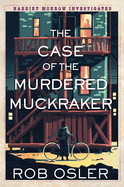
In The Case of the Murdered Muckraker, the sequel to The Case of the Missing Maid, Rob Osler vividly captures the challenges facing a young queer woman in 1898 Chicago who's trying to prove her skills as a detective while keeping her personal life private.
At 21, Harriet Morrow is the first female operative at the Prescott Detective Agency, a competitor of the Pinkerton agency. Harriet often is the smartest person in the room, despite her lack of formal education and people's assumptions about women. Agency head Theodore Prescott believes in Harriet and assigns her to investigate the murder of journalist Eugene Eldridge, who'd been trailing a corrupt politician. Harriet is eager to go undercover and is especially hoping to prove the innocence of Lucy Fara, a poor, single mother of four children. The police accused Lucy of Eugene's murder simply because she found his body at the University of Chicago Settlement tenement, where she lives. To go undercover, Harriet must set aside the men's trousers she usually wears in favor of conventional women's clothes. Harriet ferrets out information from Lucy's neighbors and follows a trail through Chicago's corruption, all the while keeping her sexuality secret despite growing feelings for another woman.
The Case of the Murdered Muckraker's strength lies in Osler's insightful characterizations of Harriet and the city in which she lives. The detective is determined that her 16-year-old brother will have more opportunities than she herself has had. And her maturity as an investigator parallels the changes in Chicago on the cusp of a new century, with its soaring population and talk of women being granted the vote. --Oline H. Cogdill, freelance reviewer