

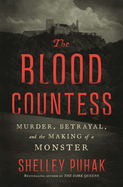
Separating myth from misogyny, The Blood Countess by Shelley Puhak (The Dark Queens) confronts the nefarious legend of a 16th-century noblewoman. Countess Elizabeth Bathory of Hungary is an object of dark fascination, a female serial killer allegedly responsible for murdering more than 600 girls in her Hungarian castle. This legend even earned her an entry in The Guiness Book of World Records as the "most prolific female murderer." But, as Puhak persuasively argues in this thrilling historical cold case, "nearly none of it is true."
Rather than catalog horrors, Puhak deftly examines the political conflicts between Hungary and Transylvania in the early 1600s, the religious wars that pitted Calvinists, Catholics, and Lutherans against each other, and the reigning Habsburg dynasty that targeted a widow for her wealth, influence, and land holdings. Using new evidence, Puhak dismantles the legend of Bathory as a vampiric ghoul who bathed in the blood of her victims to attain immortality. The countess was instead the target of a whisper campaign and "well-worn playbook" to impugn her moral character--all in the service of taking possession of her estate and removing her not insignificant influence in royal circles.
Commenting on the numerous portrayals of Bathory throughout centuries of popular culture, Puhak suggests that "our legends are all too often platforms for another era's extremists." The Blood Countess delivers a sharply argued, thoroughly researched feminist takedown of a libelous legend. --Peggy Kurkowski, book reviewer and copywriter in Denver