

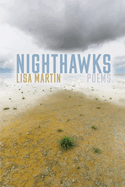
In her third collection, Nighthawks, Canadian poet Lisa Martin draws on flora and fauna imagery to craft dignified meditations on the fleeting nature of life and key relationships.
Martin (Believing Is Not the Same as Being Saved) chooses the perfect metaphors for pondering change. Doors and walls represent thresholds or barriers. Friends face cancer or bereavement, and several poems reflect on divorce. "Two" is an elegy for failed partnerships--her own and those of her acquaintances. Flowers embody transience: "Icelandic poppies in July/ in my married friends' backyard, gone/ by morning. The marriage gone, too." Elsewhere, creeping bellflower, an invasive species, symbolizes the insurmountable. "Each spring... before/ I give up the task entirely," she attempts to eradicate it, until she is able to make "peace with impossible// things." Bird-watching was a hobby Martin shared with her ex-husband, and birds make frequent appearances here, too, including in the title piece, which does double duty as an ekphrastic piece referencing the Edward Hopper painting.
"Mid Life" pictures middle age as the apex of a roller coaster, promising fear--and excitement--yet to come: "we rose over the top of the world we knew, and our youth--// and, screaming--// began to descend." A sonnet series illuminates the Myers-Briggs personality types. Martin also engages in metafictional musings on the poet's art ("Ars Poetica") and describes unusual experiences of the senses ("Synaesthetic"). The collection is a sonic feast, rich in alliteration, slant rhymes ("alone" with "home"), and careful enjambment ("Mean-// while").
Melancholy but elegant, these poems of the ephemeral affirm the joys to be found in human connection and the natural world. --Rebecca Foster, freelance reviewer, proofreader, and blogger at Bookish Beck