

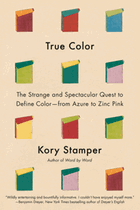
Lexicographer extraordinaire Kory Stamper displays a storyteller's instincts for drama and intrigue when narrating the curious history of dictionary color definitions in True Color: The Strange and Spectacular Quest to Define Color--from Azure to Zinc Pink. It is a rousing account of the individuals who made it their lifework to define colors for Webster's Third New International Dictionary, published in 1961, and a fascinating foray into the psychology and impact of color in our everyday lives.
Delving into the dusty archives buried in Merriam-Webster's basement, Stamper (Word by Word) rescues from obscurity I.H. Godlove, the eccentric "golden boy" of color science, and the senior dictionary editors for whom it was "practically an employment milestone" to end up in the hospital overworked. While the rest of the dictionary was crafted in plain language, Godlove's entries had "a voice." "Coral," for example, is described as "yellower and stronger than carnation rose... [and] sea pink." As with "buttercup," "chrome green," and "teal duck," scientific terms jostled with everyday associations in the mission to define color.
Godlove soldiered on through nervous breakdowns, delivering staggering amounts of "slips" to his editors. It is here that True Color reveals the true force behind Godlove's work, with a fascinating plot twist about the role of women in color sciences.
Stamper's passion for color is contagious. As True Color traverses 20th-century pigment trends, including evocative "moonstone" in the Sears catalog and Pantone's "Zuni Brown" as well as the romantic dark blush hue "Josephine," it reveals just how much our subconscious decisions are influenced by the sheer "feel" of color. --Shahina Piyarali