

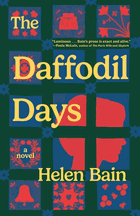
Helen Bain's remarkable debut novel, The Daffodil Days, builds a slantwise biographical portrait of Sylvia Plath through her interactions with friends and acquaintances in the last years of her life.
Like linked short stories, the 16 chapters adopt the points-of-view of various secondary characters (e.g., Plath's housekeeper, riding teacher, and brother), but the kernel of each is an encounter with Plath or a memory that illuminates her personality and state of mind. Writer Al Alvarez visits her tranquil southwest England home and comments on her development as a poet. Dr. Webb fears for her mental health when she cuts her thumb slicing onions. Even fleeting small-town connections--with church-bell ringers, tile layers, and a washing-machine salesman--are opportunities for close third-person observation. Plath comes across as stubborn and assertive ("all or nothing," her midwife describes her) yet shaky; she irks some and inspires compassion and protectiveness in others. Exchanges also reveal the social realities of 1961-62: a dress-shop salesgirl admires Plath's impulsive independence; a BBC staffer's unplanned pregnancy echoes Plath's ambivalence about motherhood.
The vignettes proceed backward through the book's 17-month span: a determined metaphorical move from resignation to optimism. The focus is therefore not on the end of Plath's life but on the full flow of her genius. Her garden's profuse daffodils symbolize beauty and productiveness--and the promise of a final spring that never came. Bain's refined prose, reminiscent of Tessa Hadley's and Andrew Miller's works, burnishes a skillfully structured, multiperspective story that reminds readers how much Plath's literary brilliance has been missed. --Rebecca Foster, freelance reviewer, proofreader, and blogger at Bookish Beck