

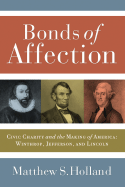

Holland's analysis of the evolution of Thomas Jefferson's thinking between drafting the Declaration of Independence and his First Inaugural Address is particularly fascinating. In the Declaration of Independence, Jefferson studiously downplayed references to God that would smack of John Winthrop's Puritan/Calvinist theocratic positions; his focus then was on rights of citizens and prevention of tyranny. Jefferson's gradual realization that a community needs something akin to Christian charity (even if a demystified version) in order to bind its members to each other is testimony to his presidential genius in a time of change.
For Abraham Lincoln, the stakes were even higher. A nondenominational man faced with leading a nation reeling from the Civil War, Lincoln certainly built on the lessons of Winthrop and Jefferson; he also saw in 1865 that something powerful (was it God's guidance?) had to be invoked to overcome forces threatening American democracy. The story of Lincoln's illumination in a time of national crisis could not be more moving or inspiring.
Inspiration runs throughout the book, along with Holland's call for increased awareness of the power of Christian charity in our time. With equal parts inspiration and provocation, the book has a rare potential for stimulating thoughtful discussions in book clubs, community forums and town meetings. If the likes of Thomas Jefferson and Abraham Lincoln, arguably our two greatest presidents, were open to rethinking long-held positions to achieve a greater good, why not the rest of us?--John McFarland