

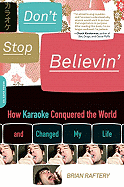

Raftery writes of his endless microphone-clutching hours in "k-boxes" with brisk humor and is self-deprecating enough about his karaoke obsession that one senses he's taken substantial ribbing for it. He admits that he's always been a terrible singer and acknowledges that karaoke is a "ludicrous pursuit." Despite all of this, though, there is an unabashed earnestness running through his account. For Raftery, karaoke provides both joyful release and a means of social connection, no matter how many times he belts out Night Ranger's "Sister Christian" in public.
To illustrate (or perhaps justify) his love for karaoke, Raftery takes readers on a tour of the karaoke bars he's visited in New York and Japan, offering details of group bonding over songs like Prince's "Raspberry Beret" and explaining why Foreigner's "Cold As Ice" is not a good duet to perform with a girlfriend. He deconstructs unspoken karaoke etiquette (never select "Stairway to Heaven," for example) and describes what makes for a "good" karaoke song: mystery, diversity and absurdity. However, he spends less time on his own story than on karaoke's history and architects, and these sections are the book's liveliest. For example, he tracks down and interviews Daisake Inoue, the Japanese inventor of the first karaoke machine (unpatented, sadly), who is now marketing a contraption that kills cockroaches. Raftery also visits studio musicians who provide the backing tracks for all those dubious tunes and filmmakers who got their start making two-minute videos to accompany the march of lyrics across the screen. Finally he flies to Bangkok to attend the Karaoke World Championship competition, an event that is every bit as delightfully absurd as it should be.
While unlikely to imbue karaoke with any gravitas, Raftery's enthusiasm for it is endearing--and ultimately infectious. His readers may not be moved enough to pick up a microphone and belt out "I Will Survive" while waiting on line at the local Trader Joe's (yes, Trader Joe's is now offering karaoke), but they will have a much better understanding (perhaps even appreciation) of those who do.--Debra Ginsberg
Shelf Talker: A light, informative and highly entertaining history of karaoke from a writer who can't stop himself from singing along.