

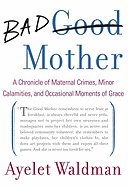
Raised in New Jersey in the 1970s by a mother who regretted trading her own career for the sake of her children, Waldman grew up determined to have both. Fortunate enough to marry a man (author Michael Chabon) who not only shared this philosophy but relished the prospect of becoming a stay-at-home husband and father, Waldman embarked on a law career--and motherhood. But having it all--an idyllic marriage, exciting career and beautiful babies--turned out to be a more complicated and less fulfilling prospect than Waldman had imagined. After quitting her job to spend more time with her children, she found herself going numb with boredom at home, her dissatisfaction deepening until she began writing and finally managed to strike a balance between motherhood and work.
This dilemma--the challenge of being a "good" mother without sacrificing one's self--is at the core of Waldman's book. Her position--that loving one's children does not necessitate being in love with them or that occasional yelling, impatience or non-organic snacks do not constitute child-abuse--is delivered bluntly and with some defensiveness but rings with truth. As she describes her own sexual experiences, her initial jealousy of her mother-in-law and copious details of breastfeeding, Waldman can be almost aggressive in her honesty. Some pieces also seem to court controversy by their very inclusion, such as the unsettling but deeply moving essay where she recounts aborting a fetus after tests confirmed a genetic abnormality. But there is no denying Waldman's courage. It takes guts to challenge so openly what have become impossible standards of motherly perfection (Waldman's note-perfect description of "attachment parenting" confirms these) and lay oneself open for that most elemental of judgments, the label of bad mother. It also takes a good deal of chutzpah (in the good sense) to admit one's mistakes without apologizing for them. Whether or not one agrees with Waldman's choices, her style of parenting or her opinions, she earns respect for all of them here. One other thing is clear at the end of these well-written and economical essays: Waldman's deep love and devotion to her children. She is, one might say, a good mother.--Debra Ginsberg
Shelf Talker: Novelist, wife and mother of four, Ayelet Waldman discusses what it means to be a good--or bad--mother in a society bent on judging women for their maternal failings.