

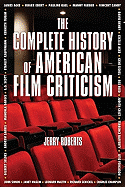
 "People have been complaining about the movies since 1914," veteran film critic Andrew Sarris has said, and, in this lively compendium, Jerry Roberts identifies the major players who got paid for both their complaining ("It stinks!") and their praise ("A masterpiece!") over the last century. In the early days just about anyone could be assigned the movie beat at a newspaper while the reporter awaited an opening on a more respectable desk, like covering horse races, but standards improved eventually.
Not until Otis Ferguson, whom Roberts deems America's first notable film critic, began writing in the New Republic in 1934 did anyone discuss film as an art bringing together dialogue, acting, camerawork and film editing. Alone among hundreds of hacks, he and Cecelia Ager (noted for her bright, brittle tone) believed movies worthy of intelligent analysis and prepared the ground for distinguished and passionate critics like James Agee, Manny Farber and Pauline Kael.
American movies embrace melodrama, comedies and gaudy epics. In Roberts's timeline, circles within the critical establishment mirror those industry genres: tight cliques exclude anyone threatening the status quo; personal vendettas, disguised as mere aesthetic differences, rage out of control; and monopolists defend their positions against competition from upstarts. The streets of New York City, Roberts shows, are no less mean than some of the allegedly high-minded cineastes. The nasty 1960s and 1970s battle between Pauline Kael and Andrew Sarris holds special appeal for him; with evident glee, he recounts the duo sniping at each other--hot-gossip copy while their wonderful reviews made movies seem both sexy and central to the culture.
In case we'd forgotten, Roberts also reminds us of the influential Bonnie and Clyde (1967). Not only did it usher in a new frankness in portraying violence and bring techniques of the French New Wave into mainstream American movies, but it was instrumental in flushing out many entrenched reviewers. When they didn't get the film's importance and appeal, they were sent on their way, and new blood came on the scene at established newspapers and magazines and at a slew of new alternative weeklies. Television, too, moved beyond the morning-show niceties of Judith Crist and Gene Shalit to the more audience-involving thumb-action of Gene Siskel and Roger Ebert. The populist swing with its call for fresh and livelier critical voices may have accelerated with the Internet, but Roberts argues that a century of steady change (in approaches, personalities and cultural status of film) underlies the criticism we see proliferating today. --John McFarland
Shelf Talker: A thorough and informative history of 100 years of film criticism in America that does not stint on satisfying gossip and score-settling.