

Phoebe Yeh has been working with Walter Dean Myers for more than 15 years. One of their early projects together, Monster (for which Christopher Myers did the cover and interior art), won the very first Michael L. Printz Award. By the time Myers sent the manuscript for We Are America to Yeh, there was only "very light editing in terms of the macro ideas of the manuscript," she said. "He had done so much of the work before I saw it." Yeh cited another such example, his novel Street Love, which Myers originally wrote in iambic pentameter and then rewrote before turning it in. "He's at a level where he knows what he wants and doesn't always have it the first couple of tries."
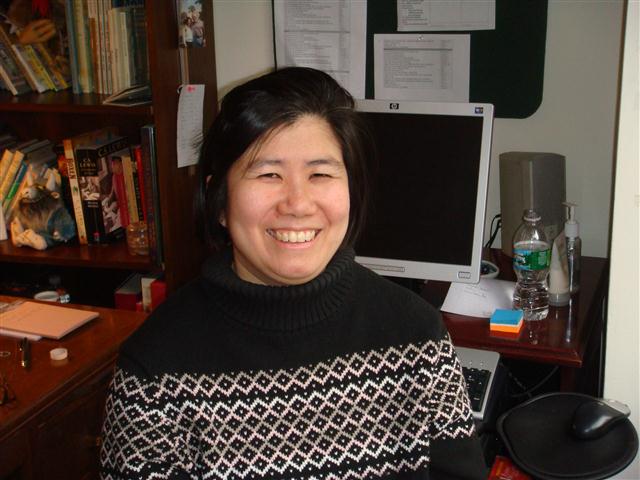 After Myers sent We
Are America to Yeh, she called him the next day and told him, "I'm
thinking this is for Chris to illustrate." She believed that Christopher
Myers had the "intellectual curiosity" to meet the challenge of the
text. It took him three years to illustrate the project. "When you see the
book, it makes perfect sense," said Yeh. "He had to come up with the
entire visual landscape for every spread. There was so much content. With [the
poem's] reference to the boats, for example, people would have expected
Christopher Columbus, and he showed John Smith." Around year two, Yeh got
to see a sample of the artwork--nine feet wide. "We
got nervous because we thought, 'We've never shot a book like this. How are we
going to do it? Where's the type going to go?" Martha Rago, the designer,
had to come up with a layout that would integrate long, flowing lines of
poetry, the quotes from the original documents and expansive horizontal artwork.
The art vignettes were Christopher Myers's idea. "I want kids to focus and
to look closely," he told Yeh. He felt that pulling out a detail from the
artwork would help them do that. He also suggested the classical typeface.
After Myers sent We
Are America to Yeh, she called him the next day and told him, "I'm
thinking this is for Chris to illustrate." She believed that Christopher
Myers had the "intellectual curiosity" to meet the challenge of the
text. It took him three years to illustrate the project. "When you see the
book, it makes perfect sense," said Yeh. "He had to come up with the
entire visual landscape for every spread. There was so much content. With [the
poem's] reference to the boats, for example, people would have expected
Christopher Columbus, and he showed John Smith." Around year two, Yeh got
to see a sample of the artwork--nine feet wide. "We
got nervous because we thought, 'We've never shot a book like this. How are we
going to do it? Where's the type going to go?" Martha Rago, the designer,
had to come up with a layout that would integrate long, flowing lines of
poetry, the quotes from the original documents and expansive horizontal artwork.
The art vignettes were Christopher Myers's idea. "I want kids to focus and
to look closely," he told Yeh. He felt that pulling out a detail from the
artwork would help them do that. He also suggested the classical typeface.
"The book will mean so much to anyone who lives here now, whether you were born and raised here, or came here," Yeh said. She herself is a first-generation American; her parents were both born in China and came to the U.S. after World War II. From a historical perspective, she believes the integration of the original quotes emphasizes Walter Dean Myers's point of their enduring impact. "Everyone made fun of Christina Aguilera for not knowing the words to 'The Star-Spangled Banner,' but I thought that was sad," Yeh said. "By having these quotes, Walter's asking, 'Why are these words still important?' and also to think of these words as poetry." The image of the children reciting the Pledge of Allegiance serves as a portrait of America today. "It's as important for Caucasian children as it is children of color to see that message of inclusion." Like the Myerses, Yeh hopes the book will launch readers on a personal journey. "I know people ask, 'Are we a melting pot or mosaic?' No one here is trying to make a statement about that. We're saying, 'You decide,' " she said. "You want to remember why people fought so hard to make something different."