

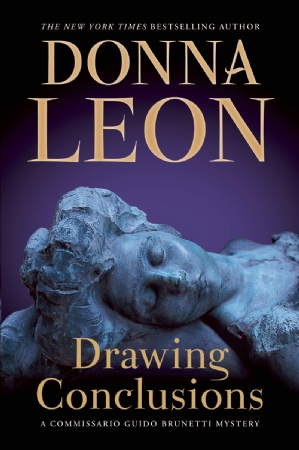
Drawing Conclusions is the 20th Commissario Guido Brunetti novel by Donna Leon, and it will absolutely delight longtime fans and new readers alike. Her writing is so pleasurable--both graceful and provocative--that those coming to her for the first time are to be envied, with 20 books to sink into.
The novel opens with translator Anna Maria Giusti returning to her Venice apartment after an unsatisfying visit with her lover at his parents' home in Palermo, where she was installed in a hotel. She can't come up with a word to describe how different they were. They carried telefonini, they dressed well, they were wealthy, they spoke "an Italian more elegant than anything she heard from her Veneto-cadenced family and friends." It was another world. As Anna Maria ponders this, she sees a notice of attempted delivery of a registered letter; she vaguely fears that some government agency has discovered an irregularity and she is under investigation for something she did--or did not do. In only a few pages we are deftly introduced to an Italy we normally don't read about--in this instance, regional differences and the reach of the government; as the book progresses, we learn about corruption, cynicism, grappa, tramezzini, the number of Chinese living in Italy and daily life in this "theft-beleaguered city," with its glorious past and literally crumbling present.
Anna Maria goes to her neighbor Signora Altavilla's apartment to get the rest of her mail, which the older woman takes in. She finds her on the floor, dead. There is a bit of blood by her head, so Anna Maria calls the police. Brunetti takes the call, glad for an excuse to leave the dinner he's not enjoying with his nemeses, stuffy Vice-Questore Giuseppe Patta and odious Lieutenant Scarpa.
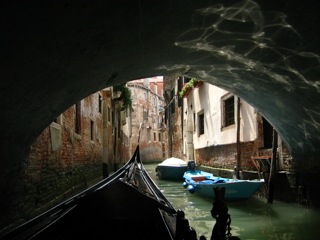 The Commissario considers the scene at the woman's apartment; while he thinks of himself as "the least superstitious of men and took pride in his intense respect for reason and good sense," he accepts the possibility of something that leaves traces, and here he senses traces of a troubled death. But the pathologist says that Costanza Altavilla died of a heart attack, and the bruise on her neck--well, perhaps when she fell....
Signora Altavilla was a good woman, a retired teacher who sponsored children through charities and visited the elderly at an old people's home, the casa di cura run by an order of nuns. She seems an unlikely candidate for murder. But her apartment is something of a mystery: there are spaces on the walls where paintings are missing, and the guest room dresser stores plastic-wrapped packets of women's underclothing in three sizes.
Brunetti meets her son and is puzzled at his insistence on being reassured that she died from a heart attack--he seems to be hiding something. The pathologist, Rizzardi, assures him, but doesn't mention the mark on her throat. When Brunetti visits the casa di cura to ask about the dead woman, he's met with evasion as the Mother Superior fences with Brunetti. She does say that Signora Altavilla believed one should always tell the truth, regardless of the cost, something the nun thinks is a luxury. Brunetti is stymied. "Who knew what went on in the mind of a nun, much less one from the South? They drank discretion with the first taste of mother's milk and grew up with frequent examples of the consequences of indiscretion."
Later, he talks to Signora Sartori, one of the people with whom Signora Altavilla spent the most time at the casa di cura, whose odd utterance "Trouble comes" leads Brunetti down a new path, with the appearance of Benito Morandi; a mysterious, deceased beauty named Madame Reynard; and more lost art.
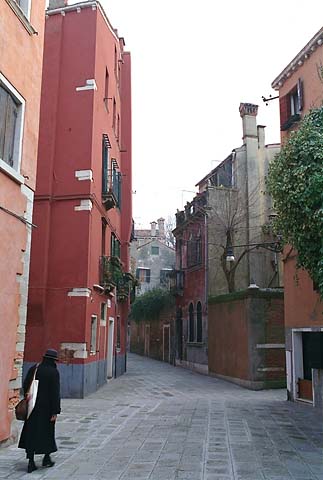 The mystery is compelling, as twisted as Venetian streets, and further joys in Drawing Conclusions come from Brunetti and his circle of family and police, and the particular world that is Venice.
His wife, Paola, whom he loves "to the point of folly," is a professor of English literature with a passion for Henry James, a fabulous cook and possessed of an acerbic wit. Brunetti tells her he worries about people being exposed to the Gazzettino 24 hours a day now that it is online. "Paola, who often took a longer and more measured view than did Brunetti, said, 'It might help to think of it as toxic waste that we don't ship to Africa.' "
His able assistant Vianello is charming and subtle, "much like the embers in a covered brazier. One never knew what brightness lurked there or what light might break forth from his invisible silence." Brunetti's superior, Patta, has two missions: minimize damage to the image of Venice, then damage to tourism ("like tinnitus, he felt the low rumble of Patta's need to do as little as possible to upset the public."). Patta's secretary is the lovely and redoubtable Signorina Elettra Zorzi, she of the advanced computer skills and no hesitation to wield them illegally for Brunetti. Inventive and clever, she often responds to questions "with the condescension of the heavyweight champion confronted by a nightclub bouncer."
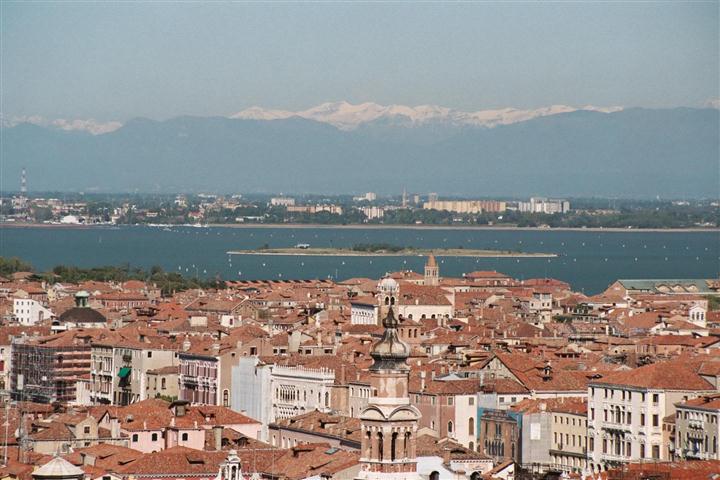 Guido Brunetti is the heart of these novels--philosophical, skeptical, slightly melancholy, an adoring husband and father, cheered by the beauty of Venice but aware of the abandonment and decay, the slow decline of the city he loves. "After a time, he went out into the kitchen, grumbling at the day, and found a note from Paola. 'Stop grumbling. Coffee on stove. Just light it. Fresh brioche on counter.' " He looks out the back window to the Dolomites in the north; though he is from many generations of Venetians, he finds solace in the mountains. They seem "so very permanent, while the sea, ever changing, was to him visibly disturbed by what happened to it, further, it was a more evident victim of the damage and depredations of man."
Brunetti is propelled by a profound sense of justice, tempered by a shrewd understanding of people. The novel's denouement brings into play the complexities of true justice mixed with an unexpected tenderness and compassion. Every sentence in this novel is to be savored, whether about a government sunk in corruption, the interplay between personae or the mysteries of sorrow and the heart. Subtle, amusing and often scathing, Drawing Conclusions is an elegant and satisfying addition to the Commissario Guido Brunetti canon. --Marilyn Dahl