

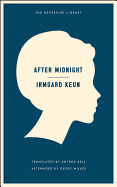
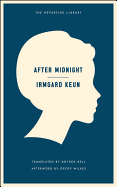
 First published in 1937 by German émigrée author Irmgard Keun (1905-1982) as Nach Mitternacht, this slim but important novel portrays the absurd cruelties of the Third Reich via the sardonic observations of a 19-year-old shopgirl who wants to believe in the greater power of love. Susanne "Sanna" Moder begins her account of the day the Führer visits Frankfurt while harboring a letter from her lover between her breasts and wondering what it can mean. She concludes her tale after midnight, by which time she has recounted the permanent distortion of the lives and loves of her social circle and altered her own fate. After Midnight is saved from hopelessness by Sanna's ability to perceive the changes around her with more mockery than lament. Her wit and youthful outrage serve as a narrative counterpunch to the largely craven atmosphere that surrounds her, yet she is canny enough to avoid public provocation.
Unlike many voice-driven novels, After Midnight captures not just the first-person protagonist's hopes and travails, but also the desires, predicaments and delinquencies of a dozen other characters. Keun mixes real-time pub vignettes with Sanna's off-the-cuff commentary and slipstream flashbacks to create a diverse portrait of life in ascendant Nazi Germany. The novel deepens as it expands from the romantic yearnings of Sanna and her friend Gertie to depict a pointless death-by-pageantry, and culminates in a desperate soirée that reveals the corrosive effects the regime on Sanna's stepbrother and their friends, particularly the diminishment of a former journalist, now muzzled and marginalized, who must cadge handouts by reminding others of his former brilliance. As related in Geoff Wilkes's helpful afterword, Irmgard Keun completed After Midnight in exile after the Nazis banned her first two bestselling novels and halted her career by denying her membership in the Reich Literary Chamber. (Keun snuck back into Germany under a false name in 1940, perhaps protected by inaccurate reports of her suicide.). If the original Nach Mitternacht is as lively as Anthea Bell's snappy English translation, Keun was not only a great satirist but also a great stylist. Now published for the first time in the United States, After Midnight is a sharp, vivid and uncompromising read on an impossible subject.--Holloway McCandless
Shelf Talker: Discover a shopgirl's sardonic recounting of the day the Führer visited Frankfurt, portraying the everyday cruelties of life within the Third Reich and making a case for the defiant power of love.