

 When Joy Peskin, editorial director of Farrar, Straus & Giroux Books for Young Readers, joined Macmillan Children's Publishing Group in February 2012, she met with Mark von Bargen, senior director of children's sales, to strategize: How could they sell more of the books that FSG is known for publishing--solid, contemporary literary fiction?
Peskin, von Bargen and their colleagues decided to create an initiative along the lines of Macmillan's Fierce Reads campaign, to focus on mostly new and emerging authors of realistic literary fiction, and help them create a community so "a rising tide could lift all ships," as Peskin put it. Elizabeth Fithian, director of marketing at Macmillan, came up with the name: ReaLITy Reads.
 |
|
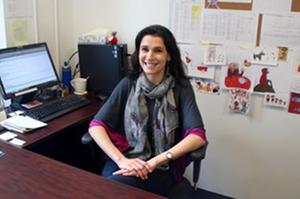
| Joy Peskin | |
With the motto "Real Books for Real Teens," the ReaLITy Reads campaign shines a light on the frontlist, with two emerging voices in young adult literature--Kristin Elizabeth Clark and her YA debut, Freakboy (October 22), and Clay Carmichael with Brother, Brother (July 30). The third is a proven success in YA: David Klass, co-author with his sister, pediatrician and journalist Perri Klass, making her YA debut with Second Impact (August 6).
The campaign builds on a foundation of such contemporary literary lights of the backlist as Speak by Laurie Halse Anderson; Martine Leavitt's My Book of Life by Angel; When We Wuz Famous by Greg Takoudes; and James Preller's Before You Go. Peskin said that part of the challenge for those who work with teens is they have readers who love Speak and ask for other books in that vein. "It's not as easy as [recommending] genre books," Peskin said.
ReaLITy Reads will be an ongoing campaign, encompassing all six Macmillan Children's Publishing Group imprints. Peskin says they're not "dead-set on contemporary"--the campaign might also feature books with historical settings. But the major requirement is that it be literary, realistic fiction. "We don't want this to be a Go Ask Alice, issue-driven book program," she said. "We want it to be literary, meaty reads."
Freakboy and My Book of Life by Angel, written in free-verse; Second Impact, told through alternating blog posts; Brother, Brother, incorporating abundant dialogue; and Speak, with its blocks of text and one-sentence paragraphs, all give readers a lot of breathing room and generous white space on the pages. Asked if weightier themes are easier to digest this way, Peskin said she suspects it's coincidence; "I think each author comes to the style that's best for her to tell the story." She does suggest, "Less is more. You want to leave some space for the reader to draw her own conclusions." The formats will appeal to kids who don't necessarily think of themselves as readers. What all these books have in common is what Peskin calls "discussability."
While not all teens may be personally affected by transgender issues (Freakboy), mysterious family ties (Brother, Brother) or head injuries brought on by contact sports (Second Impact), they will recognize many of the feelings here--figuring out where they belong, making tough decisions, finding one's voice. These books begin conversations on challenging topics that nearly all teens on the brink of adulthood face.
The Macmillan Children's Publishing Group went with evocative covers that will draw in readers. It's a big step forward from the days when covers usually represented a literal scene from the book. "I try to think of the cover as a movie poster," Peskin says. "It has to do a lot to pull the reader in." She said with Second Impact, the cover idea was, "Come for the football, stay for the larger topics."
Laurie Halse Anderson's Speak has sold three million copies since its publication nearly 15 years ago. "In my mind, that's what these books are likely to do," Peskin says. "If it can hit that sweet spot in the culture, it can grow and build over time."
Many of these titles tackle tough topics, and they're word-of-mouth books. "Do you know people who've made a bad decision and gone down the wrong path? Probably. There's so much to pull out of that book," says Peskin, referring to My Book of Life by Angel, a chronicle of child prostitution. But that could easily apply to many of the books in this ReaLITy Reads grouping. As Peskin says, "If these things didn't happen in real life, we wouldn't have to write about them."