

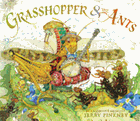
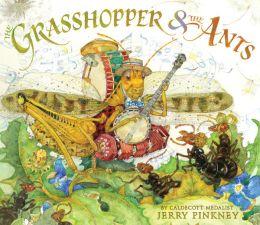
 Caldecott Medalist Jerry Pinkney's (The Lion and the Mouse) translucent, sumptuous watercolors pay tribute to the seasons, from sunlight dancing on a pond in the spring to a barren winter landscape, in a retelling that extols the virtues of planning ahead as well as living in the moment.
The author-artist introduces the central debate of the famous Aesop fable in the first spread, teeming with ants, flowers and greenery. "Why work so hard?" sings Grasshopper to the Ants. "It's spring and time to go fishing." He casts his line, nattily dressed in a red checked vest, straw hat and blue polka-dotted bow tie, seated on a drum. We sense that Grasshopper would gladly share his catch in thanks for the Ants' company. "No time to relax," the Ants reply.
In summer, the Ants wear acorn tops like hats and flower petals like bonnets. Grasshopper invites the Ants to dance and sing, and admires how the autumn leaves "twirl and glide," but the Ants keep on, rolling walnuts and bringing leaves to store. With each new view of the Grasshopper, Pinkney reveals another instrument of the one-insect band. For the autumn spread, Grasshopper plays banjo with his first set of legs, an accordion with the second set, and carries his drum set on his back. His summons to "Look at this wonderful mountain of leaves. Come play!" will resonate with young readers. They'll discover a ladybug, spider and monarch hidden in the illustration, though nary an Ant in sight.
Grasshopper alone witnesses the beauty of the first snow. "Come see!" he cries to an empty landscape and nearly bare branches. His expansive wings make for a magnificent snow angel, and for his "snow-hopper," he assembles twigs as appendages, articulated to mimic his own limbs. Pinkney's ingenious use of nature's provisions supply Grasshopper with helicopter maple seeds for snowshoes on his hind legs, as he heads to the Ants' abode to beg for entry. Pinkney exploits the horizontal expanse of the spread to convey the laborious journey.
A cutaway view depicts a thriving underground colony, where the wise and kind Queen Ant offers Grasshopper tea and refuge. They dance and sing to a stream of notes from Grasshopper's accordion and an Ant playing banjo, while the queen sits on the drum. The endpapers indicate that, come spring, Grasshopper helps the Ants with their provisions.
Without judgment, Pinkney shows that neither extreme pays off--all play or all work. The combination of preparation and enjoying the present makes life worthwhile. --Jennifer M. Brown, children's editor, Shelf Awareness
Shelf Talker: The Caldecott Medalist provides a twist to the classic Aesop tale, suggesting that a life of contentment combines both work and play.