

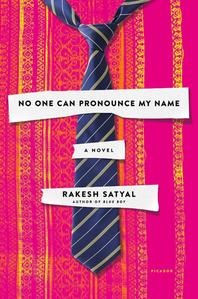
 No One Can Pronounce My Name, the second novel by Rakesh Satyal (Blue Boy), pays a humorous, loving visit to the Indian immigrant community of Cleveland, Ohio, where a handful of oddballs and outsiders come together to form a circle of support that changes their lives.
Middle-aged Harit doesn't know how to talk to his mother after his sister, Swati, the glue that held them together, dies in a freak accident. To reach her, he dresses in his sister's sari and pretends he is Swati, giving his grief-stricken and mostly blind parent her favorite child back. Shy and socially maladroit, Harit works sales in a department store, where he becomes friends with flamboyant coworker Teddy, who introduces Harit to alcohol at their local T.G.I. Fridays.
Newly minted empty nester Ranjana thinks her husband, Mohan, has a girlfriend. Not wanting to become the subject of gossip, she keeps her suspicions from her friends and throws herself into writing a vampire novel. The writing group she attends, however, is more contentious than constructive. Her day job as a receptionist at the aptly named Dr. Butt's proctology clinic means putting up with annoying coworker Cheryl. Moreover, her budding friendship with Achyut, a young gay patient and bartender, leads her outside her comfort zone and brings Harit into her orbit.
Ranjana's son, Prashant, a first-year chemistry major at Princeton University, demands space from his parents while he tries on his independence. His powerful crush on Kavita, a fellow ABCD (American-Born Confused Desi) who embraces Hinduism and belongs to the South Asian Student Association, drags Prashant into conflict over whether he wants to escape or embrace his roots.
No One Can Pronounce My Name meditates on immigrants' lifelong struggle for acceptance in the U.S., but also demonstrates that the support of self-made communities of friends can make all the difference. Though the main players' specific circumstances are different, all face loneliness and struggles with identity--concerning which course of study to choose or the difficulties of coming out. Each finds social connection fraught with unbearable awkwardness. While some internal conflicts--such as Ranjana's initial hesitance to socialize with a gay man--stem from cultural values, universal issues of self-acceptance and insecurity more often form the driving force. Satyal delves deeply into each character's past and psyche, mining fragility and heartache like rare jewels. While the introspection at times slows the action, the natural outgrowth of situational comedy balances the pace. Satyal never plays his characters for fools, though, and book clubs will find rich fodder for discussion in this sparkling, deeply felt story of emotional growth. --Jaclyn Fulwood, blogger at Infinite Reads
Shelf Talker: In Cleveland's Indian American community, two discontented middle-agers break out of their ruts with help from their friends.