

 |
|
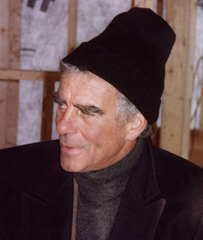
| Jack Macrae | |
John "Jack" Macrae III, "a dashing publisher who gambled on groundbreaking books and dauntlessly defended authors who defied injustices committed by their own governments," died February 1, the New York Times reported. He was 91.
Macrae was president and publisher of E.P. Dutton from 1968 to 1981, representing the third generation of his family to run the company, the Times noted. His grandfather, John Macrae Sr., started working for Dutton as a 19-year-old clerk in the company's New York City store, rose through the ranks to become president when the company's founder, E.P. Dutton, died in 1923. Jack Macrae's father, John Jr., joined the company in 1921 as marketing director and retired as president in 1974, when Dutton was sold to Elsevier.
After the publisher was sold a second time, Jack Macrae joined Henry Holt & Company, where he worked for 35 years as editor in chief and later had his own imprint. He retired in 2018. With his wife, gallerist Paula Cooper, he also owned 192 Books in Manhattan's Chelsea neighborhood.
Among the noteworthy books Macrae published were Gail Sheehy's Passages; David Levering Lewis's Pulitzer Prize-winning W.E.B. Du Bois: Biography of a Race, 1868-1919; the American edition of Hilary Mantel's Wolf Hall; and titles by Edward Abbey and Jorge Luis Borges.
Macrae was chairman of the International Freedom to Publish Committee of the Association of American Publishers, and was among those who urged his fellow publishers to boycott the Moscow Book Fair in 1983 to protest the Soviet Union's treatment of dissidents. He also championed Salman Rushdie.
"Jack traveled to Cuba and Iran on human rights missions," said Jeri Laber, a founder of Human Rights Watch, adding that in addition to making "several trips on his own to Communist Poland," Macrae went to Communist Czechoslovakia to meet with dissident playwright Vaclav Havel.
"It was Jack who got me to go to San Francisco and meet Eric Hoffer, the longshoreman-philosopher whose book The True Believer had become a surprise bestseller," writer Calvin Tomkins said. "Jack published my biography of Hoffer in 1965. Not many people read it, but that didn't discourage Jack.... Publishing was not about making money, he thought. It was about ideas, and we both felt that Hoffer's True Believer was one of the important definitions of how totalitarian regimes take root."
"He was probably the last of the old-time, gentleman WASP publishers--born into the business. He had immense personal charm, and it was hard not to get swept up by him," said Charles McGrath, a former editor of the New York Times Book Review, adding that late in life, Macrae "found out he had multiple sclerosis, but didn't let that slow him down. He zipped around the office--and the city, for that matter--in a motorized wheelchair, as cheerful as ever."