

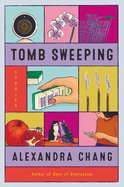
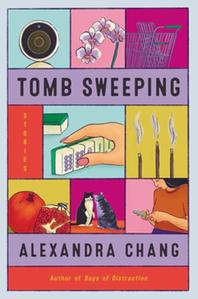
 The 15 short stories in Alexandra Chang's insightful second book, Tomb Sweeping, feature Asian and Asian American characters facing lost or altered relationships. In each selection, a conflict arises when technology or a chance of success is at odds with tradition or with valuing one's family.
Chang (Days of Distraction) uses first- and third-person narration roughly equally. "Unknown by Unknown" stars a 30-something California woman who, recently laid off, takes a house-sitting job and becomes obsessed with a particular painting on display. Notebooks full of sketches by the same artist mysteriously arrive on the doorstep. A delicious hint of the magical is also present in the collection's standout, "Farewell, Hank." Adrienne and her mother, Jia, attend a living funeral that Orchid Lady throws for her ill husband. Learning of their hostess's habit of sprinkling loved ones' ashes on young plants as a form of reincarnation, they set their skepticism aside and decide to do the same with Adrienne's late father's remains.
Ling Ling, age 11, narrates the title story as she accompanies her parents on a visit to her grandparents' graves in a Singapore cemetery, which prompts her surviving grandfather to recount the tragedy of his brother being executed by Japanese soldiers. In "Flies," 11-year-old Ying Ying remembers the sordid rental house that seemed to presage her parents' break-up.
Several of the stories are built around before-and-after storylines. For instance, in "Klara," the narrator's meeting with Klara, an old friend, in New York City gives her the opportunity to look back at their college years and ponder the causes of their estrangement. "Cure for Life" muses on the perhaps inappropriate relationship between grocery store colleagues by following up with them a decade later. In the tale with the most innovative structure, "Li Fan," the life of an "Asian recycling lady" unfolds backward from her death.
A pair of stories employ a cautionary element: the fable-like "To Get Rich Is Glorious," featuring FuFu, an unfulfilled housewife who starts working in an illegal casino; and "Me and My Algo," in which the narrator questions whether an algorithm that knows everything about her, including her future, is a great idea after all. In "Persona Development," Patricia Liu uses surveillance cameras to check on her aging parents, but finds it's no substitute for in-person connection.
Chang achieves variety in voice, tone, and topic--including childhood prescience, young adults' poor decisions, death and other losses. What links all the stories, though, is her curiosity about unfolding lives and her keen insight into relationships. --Rebecca Foster, freelance reviewer, proofreader and blogger at Bookish Beck
Shelf Talker: The characters in Alexandra Chang's 15 insightful stories, many of them first- or second-generation Asian American immigrants, turn to tradition or technology as they seek to cope with loss.