

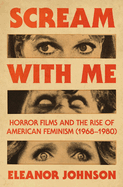
 Listen in on the conversation between women's rights in the U.S. and the cinematic world through six classics of the horror film genre in the adept, intelligent pop-culture history Scream with Me: Horror Films and the Rise of American Feminism (1968-1980) by Eleanor Johnson. Horror is often cited as a misogynistic genre, but here Johnson, professor of English and Comparative Literature at Columbia University, points out a golden era of scary stories with a grounding in reproductive rights, domestic violence awareness, and attitudes toward women working outside the home.
Johnson's project began with a lecture in 2022 on the 1968 film Rosemary's Baby, in which a young New York City woman unwittingly and unwillingly becomes pregnant with the child of Satan. Johnson (Waster and the Wasters: Poetry and Ecosystemic Thought in Medieval England) saw the film as "a parable about the dangers of denying women their reproductive agency" and taught it as such. The U.S. Supreme Court's reversal of federal protection for reproductive rights shortly afterward had Johnson turning to art, "where the most complex social problems and traumas get worked through and processed," and specifically horror again. She maintains that horror has deep ties with American feminism, especially in a subgenre she terms "domestic horror": films that place the horror within the home and family. Johnson's chapters peel away what the reader thinks they know about each film and point out the subtext, intentional or not. Like Rosemary's Baby, Alien explores reproductive violence. The Stepford Wives spotlights conflict over women's liberation. The Exorcist and The Shining both deal with domestic violence. The Omen shows the duplicity and oppression inherent in the patriarchy. Analyses of the women's rights landscape and significant events at the time of each movie's release give context to dissections of each film's plot, placing horror squarely in frame with reality.
This commentary on the horror genre's ability to shape and echo the political landscape is riveting, enlightening, and occasionally scream-inducing in its reminders of the not-so-long past. Readers should expect to be entertained while finding new respect for the genre, though the author does not sugarcoat the abuses of the male directors behind the projects. Johnson's fly-throughs of point-supporting scenes create an instant desire to see for oneself, and the experience may be heightened with a watch-along. This deep excavation of art imitating life is more than positive affirmation for horror fans; it is a call--or scream--to action. --Jaclyn Fulwood, blogger at Infinite Reads
Shelf Talker: This adept and intelligent pop culture history views six classics of horror cinema through an impassioned feminist lens.