

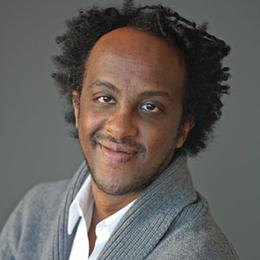
Novelist Dinaw Mengestu has been elected president of PEN America for a two-year term, succeeding Jennifer Finney Boylan, the trans author and LGBTQ+ activist whose 18 books include novels, thrillers, memoirs, and a YA adventure series.
 |
|
| Dinaw Mengestu | |
Mengestu has published four novels. The Beautiful Things That Heaven Bears (2007), How to Read the Air (2010), and All Our Names (2014) center on the psychic toll and complexities of immigration from his native Ethiopia to the United States. His most recent novel, Someone Like Us (2024), shifts to the U.S.-born second generation, examining how displacement shapes their identity and a sense of belonging. He has also reported on conflicts in Darfur, Uganda, and eastern Congo in articles for the New York Times, the New Yorker, Harper's, Granta, and Rolling Stone.
Mengestu directs both the Center for Ethics and Writing and the Written Arts Program at Bard College and has been a PEN America trustee since 2016. In 2012, he won a MacArthur Genius Grant and has won the National Book Foundation 5 Under 35 Award.
PEN America interim co-CEO and chief of Free Expression programs Summer Lopez said, "Dinaw Mengestu has spent his career illuminating the borders between countries, histories, and identities, and bringing readers into the lives of those too often pushed to the margins. As he steps into the role of PEN America president, his unwavering commitment to free expression, his advocacy for writers under threat around the world, and his profound belief in literature's power to humanize across deep divides will guide the organization through this pivotal moment for democracy and the written word."
Mengestu said, "My driving ambition at PEN America has been to spread and promote the joy of literature--to make reading and the conversations and ideas that reading inspires accessible to more people with greater recognition of the incredible value that books add to our lives.
"My hope is to support PEN America in its work celebrating the unique power of literature. To make reading, and the conversations and ideas that reading inspires accessible is an integral part of our defense and advocacy for the free expression rights that make literature not only possible, but necessary.
"Across the globe, we live in a moment that demands fierce advocacy for free expression and the freedoms to read, write, and speak. Political and cultural forces are trying to define our societies in very singular and restrictive terms. If we do not make room for the plurality and range of voices embodied in our literature, we endanger not only our culture, but our democracy."