

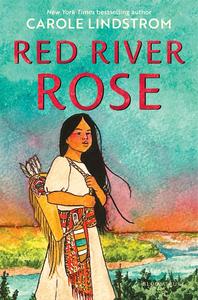
 In Red River Rose, an engrossing and harrowing work of historical fiction, Carole Lindstrom offers a First Nations response to the romanticization of the pioneer spirit celebrated in tales of 19th-century western expansion. It features 12-year-old Rose, a courageous girl trying to help save her Métis community from extirpation by the Canadian government.
Rose loves her way of life in Batoche, "a small Métis community in the Northwest Territories" of Canada, which boasts "seven stores, and a small schoolhouse, a church, and a rectory" as well as a handful of white settlers. Rose spends her time trapping, hunting, playing, and gathering medicinal herbs on the banks of the South Saskatchewan River. When rumors start circulating about the Canadian government planning to divide and distribute their land to more settlers coming from the east, it becomes clear the Métis are going to resist. Rose wants to fight with her community, but as a girl she is expected to help her ma with childcare and herb gathering in their safe house (a "cave camp") away from the fighting. Her heroic cleverness, bravery, and willingness to stretch the limits of what's allowed contribute to her community holding their own--at least for a little while--against the North West Mounted Police soldiers during what became known as the North-West Resistance.
In an author's note, Lindstrom tells readers that the protagonist of her stirring middle-grade novel is the very same child from her picture book The Gift of the Great Buffalo. Lindstrom writes from the viewpoint of her own Métis and First Nation ancestors who fought in the Saskatchewan North-West Resistance of 1885, calling this fictionalized account "my Little House on the Prairie." Here, Lindstrom writes "from a Native perspective of a young girl, much like Laura Ingalls." The two protagonists share a keen sense of justice, and both their families work hard to make a happy life for themselves, but there is a hole in the Little House books that is filled in Red River Rose: the perspective of all the people the settlers often violently displaced from their homes. The book ends on a hopeful but poignant note: "I'm like you, Pa," Rose says. "Always fighting for what's right, even if it doesn't stop the thing you want to stop." Like Linda Sue Park's Prairie Lotus and the Show Me a Sign series by Ann Clare LeZotte, Red River Rose thrills, provokes, and disquiets. --Emilie Coulter, freelance writer and editor
Shelf Talker: In this moving middle-grade First Nations take on the romanticization of 19th-century pioneer stories, a Métis girl joins her community as they resist subjugation by the government.