


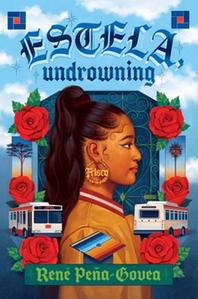
 Desahogarse is a Spanish word that means to vent and "pour out your feelings": literally to undrown yourself. In René Peña-Govea's searing and cathartic young adult debut, Estela, Undrowning, a senior in high school is fueled by beautiful poetry and explosive rage.
Estela Morales attends one of San Francisco's most exclusive and elite public high schools. She is proud of the fact that she tested into the school and feels distinctly different from the majority of the other brown and Black students who got in via lottery (aka the "lotts"). Meanwhile, she's worried Spanish, which feels unruly on her tongue, will tank her college prospects. Estela feels bogged down by her feelings as a "defective Latina" and asks fellow student Rogelio to tutor her. As a relationship between Estela and Rogelio blooms, she also deals with the implications of an eviction notice that threatens her home and family. Estela uses poetry to "purge" her feelings: "Destitution, ruination, defenestration,/ and the most precise:/ eviction."
At the same time, one of Estela's teachers announces "a poetry contest on the theme of Latiné identity" that is open to "all Latiné-identified students." Estela plucks up her nerve to enter and comes in second, first place going to a classmate who doesn't identify as Latiné. A controversy erupts across the school regarding merit, fairness, and diversity, but already overwhelmed Estela does her best to evade involvement. She is frustrated with how she's perceived, anxious about what will happen to her family, and harboring gruff thoughts about how other minority students navigate the school's scrutiny. Ultimately, Estela has no choice but to undrown herself, come to terms with her toxic feelings, and fight for herself and her community.
Peña-Govea states in her author's note that while Estela, Undrowning "is a work of fiction, it reflects the highly segregated schools in my hometown of San Francisco." In this debut, she renders a sweaty and combustible city full of passionate and complicated characters who defy tidy characterizations, tackling prickly conversations about identity with care and academic-level precision. As Estela begins to understand her own biases and insecurities, she recognizes that she was "afraid not to be like" a fellow Latina student, and "afraid to be like her. Afraid of the mirror?" Estela's world overflows with diverse ethnic backgrounds, gender expressions, and sexual preferences that, in less sensitive hands, could feel token or flat. But Peña-Govea writes with such confidence that her characters realistically, fiercely wrestle with nuanced conversations, allowing for a classic bildungsroman with modern vitality. --Luis G. Rendon
Shelf Talker: The complicated tendrils of identity, equity, and diversity are untangled in this soul-satiating YA debut about a student who struggles with her place in an elite San Francisco public high school.