


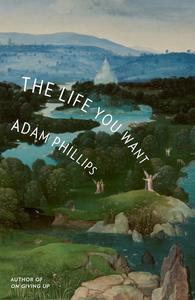
 Anyone picking up The Life You Want seeking easily digestible guidance on how to meet life's challenges is in for something of a surprise. In these seven concise, erudite, but frequently dense essays, British psychoanalyst Adam Phillips (On Wanting to Change) is less interested in dispensing advice about how to do that than he is in plumbing some of the depths of human consciousness explored by Sigmund Freud, his followers, and his critics.
Beginning with the opening essay, "On Getting the Life You Want," Phillips introduces the book's central theme: the contrast between Freud's theory of the unconscious, a "different, alien, unlearned, instinct-driven form of thinking," and the "certainly novel" view that American pragmatist philosopher Richard Rorty espoused. Rorty, as Phillips characterizes his view, describes the unconscious (or as he calls it, "unconscious selves") as "potentially good company, a group of selves more than able to keep our best interests in mind. Really useful, helpful and informed."
Phillips returns to this theme in the essay "On Not Being Taught," where he writes most accessibly about the book's ostensible subject. In it, he expands his investigation to focus on the work of prominent British pediatrician and psychoanalyst Donald Winnicott, best known for his theory of "good enough" parenting, and the subject of one of Phillips's earlier books. After discussing Winnicott's affinity for Freud's determinism, he nonetheless recognizes a commonality with Rorty, as "both describe us as picking out and pulling out of this tangle, this chaos, what matters to us, what works for us, what we find ourselves affected by in the cultural fields that we find ourselves in." That view contrasts with the psychoanalytic perspective that "believes in the unconscious, instinctual life and the Oedipus complex, and therefore has a greatly attenuated sense of human agency, all underwritten by an ineluctable biological determinism and a consequent belief in objective scientific truth."
The Life You Want clearly presumes a grounding in psychoanalytic theory and might have benefited from some explanatory notes and a list of titles for further reading to provide help for those not already versed in the concepts and controversies Phillips addresses. That includes his frequent references to some of the lesser known psychoanalysts (at least to general readers) like Jean Laplanche and Sándor Ferenczi whose work he alludes to. Though it's likely to be a challenging undertaking, anyone interested in taking a deep dive into theories of the unconscious and its impact on how we live our lives will find it intriguing and may be inspired to go further in their own investigation. ---Harvey Freedenberg, freelance reviewer
Shelf Talker: In seven challenging essays, psychoanalyst Adam Phillips contrasts Freudian psychoanalysis and Rortyan pragmatism in describing the formation of human identity.