

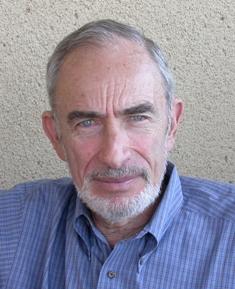
Paul R. Ehrlich, "an eminent ecologist and population scientist whose bestselling book, The Population Bomb, was celebrated as a prescient warning of a coming age of food shortages and famine but later criticized by conservatives and academic rivals for what they called its sky-is-falling rhetoric," died March 13, the New York Times reported. He was 93. The book, published in 1968, "turned Ehrlich into one of the global environmental movement's most recognized leaders."
 |
|
| Paul R. Ehrlich | |
As a young professor of biology at Stanford University, he gave lectures on evolution, focusing on stresses placed on plants and animals by industrial pollution and rapid population growth. A distillation of those lectures appeared in the December 1967 issue of New Scientist magazine.
Six months later, having been encouraged by Sierra Club executive director David Brower to write a book on the subject, Ehrlich published The Population Bomb. "In 233 pages, he asserted that the planet's condition began to deteriorate rapidly in the 1950s, when the rate of population growth exceeded the increase in food production--or, as he put it, when 'the stork passed the plow.' He called on couples to limit their families to one or two children," the Times wrote.
His book sold three million copies and Ehrlich became one of the environmental movement's most recognized leaders. His popularity increased with appearances on The Tonight Show Starring Johnny Carson, where he was a guest about 20 times.
Ehrlich's The End of Affluence (1974) forecast a "nutritional disaster" in the 1970s, predicting that "before 1985, mankind will enter a genuine age of scarcity." He co-authored the book with his wife, Anne H. Ehrlich, who wrote or edited 15 books with him.
His rivals questioned the validity of his claims. In 1980, Julian Simon, an economist at the University of Maryland, challenged Ehrlich and two of his colleagues with what Stewart Brand, a founder of the Whole Earth Catalog, called "one of the great revelatory bets." Ehrlich accepted Simon's challenge, betting that the prices of five key metals would rise in the 1980s. Simon believed that innovation would drive prices down. The Times noted that Ehrlich ultimately conceded defeat, and the "disclosure of the bet came amid a national backlash to American environmentalism in the early 1990s, led by free-market conservatives and industrial executives who questioned the movement's scientific data." The Ehrlichs responded in 1996 with their book Betrayal of Science and Reason: How Anti-Environmental Rhetoric Threatens Our Future.
A member of the National Academy of Sciences, Ehrlich was a founder of Zero Population Growth (now known as Population Connection) in 1968, and Stanford's Center for Conservation Biology in 1984. He was the author, co-author or editor of 50 books and hundreds of scientific articles. His honors include a MacArthur prize in 1990.
Responding to critics who later pointed out that some of his predictions hadn't come to pass, Ehrlich repeated his fundamental convictions, telling the Guardian in 2018 that an unsustainable focus on "perpetual growth"--leading to climate change and loss of biodiversity--meant that the collapse of civilization was "a near certainty in the next few decades." And in 2015, he told the Times his analysis in the 1960s had actually been somewhat conservative, adding: "My language would be even more apocalyptic today."