

 Japanese author Koji Suzuki, "sometimes called the Stephen King of Japan, whose bestselling Ring series helped create a genre known as J-horror that relied more on psychological suspense than on gore, spawning a multimedia franchise that included a 2002 blockbuster Hollywood movie," died May 8, the New York Times reported. He was 68.
Suzuki earned a degree in French literature from Keio University in Tokyo, where he focussed on literary fiction, particularly the works of Jean-Paul Sartre, Albert Camus, and Thomas Mann. "I actually don't like all that supernatural stuff," he told the Times in 2004. "I really dislike most horror writing."
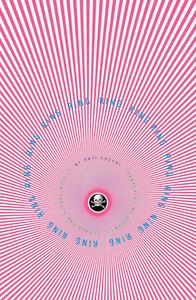
Suzuki's 1991 novel Ring, the first of a trilogy, "was about a cursed videotape whose viewers would die unless they copied it and passed it on to someone else within a week," the Times wrote. It sold nearly three million copies in Japan. The trilogy featured a vengeful intersex ghost called Sadako, who also appears in Spiral (1995) and Loop (1998).
He later told the British tabloid Metro that his viewpoint on the horror genre shifted when he felt he could write "an epoch-making story" and create something unusual in horror because he was an outsider. "I managed to write a good horror story," he said, "because I don't actually like horror. If I liked it and was always reading it, I would have written typical horror."
Suzuki expanded the Ring franchise to include the story collection Birthday (1999) and the novels S (2012) and Tide (2013), along with a 1998 Japanese film titled Ring and a 2002 American remake, The Ring. Other movie spinoffs, a TV series, manga adaptations, and video games followed. By 2004, Suzuki's books had sold more than 10 million copies in Japan.
At one point, he vowed never to write horror fiction again, but that decision came to feel too "constricting," he told the Times in 2004. He later published the novel Edge (2008), "blending horror and science fiction, about a world in which, among other troubling developments, the value of Pi begins to change, suggesting that the structure of the universe is breaking down," the Times noted. The book won a Shirley Jackson Award for best novel in 2012.
In his final work, Ubiquitous (2025), Suzuki returned to classic J-horror with a novel about plants ruling the earth. It was intended to be the first volume of a tetralogy. In a 2023 interview with the Horror Writers Association, Suzuki said the theme of the four books would be simple: If the universe had free will, "what kind of life would it wish for the human race?"