

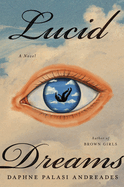
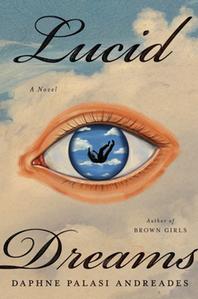
 In Daphne Palasi Andreades's imaginative second novel, Lucid Dreams, a Brooklyn writer plagued by insomnia and writer's block recovers their creativity by accepting their sexuality and reconnecting with their heritage.
Like Andreades (Brown Girls), the narrator is a Filipina American working on a sophomore novel after a successful debut. At 29, they're frustrated that all anyone--including their mother and their husband Adrian's religious parents--seems to care about is when they are going to have a baby. The narrative is set between March 2022 and July 2023, and Covid-19 is still lingering. As the novel deadline approaches and part of the book tour is canceled, the narrator wonders if this career choice has been worth it: "Art and money.... Money needed to fund not just the artmaking, but necessities--housing, food, healthcare--to survive."
Just when Lucid Dreams is starting to feel like paint-by-numbers autofiction, intriguing elements arise: the narrator gets a drastic haircut, starts dressing more androgynously, and checks "bisexual" on a medical form (later, they tell Adrian, "I'm queer"). They book a flight back to the Philippines, start taking online Tagalog classes, and test positive for Covid-19, experiencing brain fog. Given their confused mental state and peculiar dreams, the narrator finds it hard to know quite what to make of the anatomical eye drawings that continue appearing in their sketchbook and as graffiti. They keep seeing a mysterious man in Victorian garb, too. Occasional poetry fragments consider possible explanations: "negative impacts on mental health/ cause dreamers/ to blur the lines between/ reality and fantasy."
The story comes alive as the narrator travels to France, the Philippines, and Germany--literal journeys that run in parallel with their internal development. Though they become more proficient in Tagalog, a childhood feeling of belonging "neither here nor there" persists. They wonder what might have happened had their parents not left their homeland, seeing "a mirror reflection of the other life I could have had."
The man in the Victorian suit, it emerges, is José Rizal, a revolutionary Filipino ophthalmologist. He and painter Alice Neel, whom the narrator "meets" on the streets of Paris one night after appreciating her paintings in a museum, are posthumous guides encouraging the narrator to pursue art for art's sake. When they accept an integrated identity, the narrator rediscovers their missing manuscript, Lucid Dreams.
This odd blend of autofiction, magical realism, and metafiction is ultimately endearing and should attract Elaine Castillo's and Patricia Lockwood's fans. --Rebecca Foster, freelance reviewer, proofreader, and blogger at Bookish Beck
Shelf Talker: Daphne Palasi Andreades's inventive sophomore novel fuses autofiction and magical realism as a frustrated author rediscovers their artistic calling through travel, queerness, and advice from dead sages.