

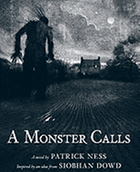
Wasting not a word in a narrative leavened with humor, Patrick Ness (the Chaos Walking trilogy) describes the isolation that accompanies the grief, pain and anger of a child whose mother is battling a terminal illness. Every night, when 13-year-old Conor O'Malley goes to sleep, the same nightmare haunts him--the one "he would never tell another living soul about."
Conor has no one to talk to about his mother's cancer, so he summons a monster. It shows up outside his bedroom window just after midnight, at 12:07. Conor is not afraid. "I've seen worse," he tells the monster, who stands more than 30 feet tall. Much of the novel's humor results from their playful friction.
The monster tells Conor that he will tell three stories, and then Conor must tell his--he must describe his nightmare. Through the monster's stories, Conor begins to make peace with the chaos of his life. Not because the stories go the way stories often go, but because they show him that creation and destruction are part of a continuum. The boy comes to understand that the monster truly knows him and accepts him exactly as he is, and that there is no wrong way to grieve. Patrick Ness tells the truth about grief--that it is wrapped up with anger and sadness and fear, and those who do not bring it forth risk retreating into silence and isolation. That is the gift that Ness and his monster give to every reader who fears the loss of the one they love. –Jennifer M. Brown, children's editor, Shelf Awareness
For more on A Monster Calls, check out our Maximum Shelf.