

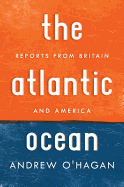
Among the most striking features of Andrew O'Hagan's The Atlantic Ocean is the breadth of its subject matter. From incisive essays on writers such as James Baldwin, E.M. Forster and William Styron to accounts of the decline of British farming, an appreciation of the Beatles and a reminiscence of Marilyn Monroe, these 21 sterling pieces marry the concerns of an impressive intellect to an insatiable curiosity, creating a body of work that justifiably invites comparison to the nonfiction of George Orwell or, among O'Hagan's contemporaries, writers like Christopher Hitchens or Geoff Dyer.
In a collection so consistently strong it's difficult to choose highlights, two of the best and lengthiest works of journalism appear side by side. In "After Hurricane Katrina," O'Hagan accompanies two North Carolina men--one young and white, the other black and middle-aged--on what turns out to be a mostly futile trip to a New Orleans that "had become the thing that geological memory knew it to be--a voluminous swamp, a lake of reeds and tangled boughs, except that television sets and teddy bears and living people had got in the way." Then "Brothers" twins the deaths of two remarkably dissimilar soldiers--Guardsman Anthony Wakefield, a British infantryman, and Lieutenant Colonel John Spahr, a celebrated United States fighter pilot--both killed in Iraq on May 2, 2005, exactly two years after President Bush declared the end of major combat operations there.
Most of the pieces in The Atlantic Ocean first appeared in British publications, and thus it's likely Andrew O'Hagan isn't widely known to American readers. Perhaps these fine examples of his abundant talent will change that. --Harvey Freedenberg, attorney and freelance reviewer