

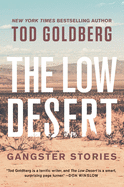
Tod Goldberg's sense of humor and attention to character distinguish the stories in The Low Desert from more traditional fiction about the folly of criminals, those who try to thwart them, and those operating somewhere in between. "Professor Rainmaker" revolves around William Cooperman, who invented an ecologically sound but ultimately unmarketable product intended to obviate the need for elaborate sprinkler systems; instead, he uses the technology to grow incredibly powerful weed, which he sells. Meanwhile, he grudgingly teaches a summer school course in hydrology and listens to gangsta rap "so that he could figure out what the hell people were saying to him, both in class and on the streets." "Palm Springs" centers on Tania, a middle-aged, unmarried cocktail waitress who works at a casino and is looking for her 18-year-old daughter, Natalya, who has disappeared. Some years back, Tania was able to adopt a child from Russia because she won big one night at Caribbean stud: "Adopting Natalya wasn't something Tania planned. It was the money that did it. Well, the money and loneliness."
Tania and others cycle through The Low Desert's dozen stories. Readers may be surprised, if not always relieved, upon learning that certain characters have lived to tell or inhabit another tale. The Low Desert isn't for the faint of heart, but Goldberg (Gangsterland; Gangster Nation) counterbalances the brutality with glimmers of humanity: several of his characters have soft spots for dogs, some lawless types dream of bettering themselves. In "The Spare," a high-ranking member of a crime family decides to risk it all so that his son "would never make the same mistakes" he has. The kid has a better chance of winning at Caribbean stud. --Nell Beram, author and freelance writer