

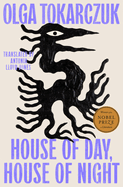
Polish Nobel laureate Olga Tokarczuk (Drive Your Plow over the Bones of the Dead) has described her literary works as "constellation novels," a label that fit her 2018 novel, Flights, winner of the Man Booker International Prize. To the extent that term describes a collection of often seemingly disparate narrative strands that invites the reader to assemble them into patterns of meaning, it's also an apt characterization of House of Day, House of Night. Antonia Lloyd-Jones's English translation is a beautifully allusive collage of fully formed short stories, memorable character studies, and glimpses of small-town life.
Tokarczuk's novel is set in the region of Silesia. Anchoring it are an unnamed contemporary narrator and her neighbor, an elderly woman named Marta, best known for her skill as a wigmaker and her familiarity with the local flora. The novel comes to life in its assortment of diverse short stories, some of them self-contained, others segmented throughout the book. Among the most striking involves Paschalis, a young monk who makes it his mission to secure sainthood for Kummernis, a beautiful woman from the medieval period crucified by her father after she miraculously grows a beard resembling Christ's to thwart his demand that she marry one of his fellow knights. As Paschalis immerses himself in her story, he grapples with his own sexual identity.
Spanning hundreds of years, House of Day, House of Night pulses with the power of dreams, visions, and symbols. There's nothing extraordinary about the region in which it's rooted, or the modest lives of the people who live there, but in the hands of Olga Tokarzcuk their stories flourish. --Harvey Freedenberg, freelance reviewer