

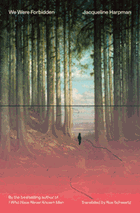
We Were Forbidden by the late Belgian writer Jacqueline Harpman (1929-2012) collects three intriguing never-before-translated stories. Throughout the trio, Harpman nimbly examines personal agency, particularly for women. Ros Schwartz, who also translated I Who Have Never Known Men, skillfully captures Harpman's unembellished clarity, reflecting the directness of her spare prose.
"The Ardennes Forest" opens the collection, a dystopian narrative about a military group assigned to patrol the forests during a seemingly senseless war. When they happen upon a deserted village, for a few days they eat their fill, drink wine, dance, sleep in beds--and remember comfort and community. Harpman's writing turns autobiographical in "The Outcast," which takes readers to Casablanca where her Jewish family fled to escape the Nazis during World War II. The 15-year-old narrator recalls the cleaving of a close friendship over twisted words, cruel accusations, striking ignorance--and an administration that unfairly ostracizes and silences her as punishment. The final story, "The Broom Closet," is also the best, a slyly entertaining meta-narrative spotlighting an author composing a story about a woman and her affairs. Harpman shifts without warning--but entertainingly--between writer and protagonist. The young wife is 22, "married for six tedious years" but later, her creator will decide, "twenty-two may be too old, let us say nineteen and married three years."
Given Harpman's notable playfulness, certain details might imply connections between the three stories, like the soldier named Ulrich in "Forest" and "Closet." The suggestion of such liminal narratives makes Harpman's fiction even more cleverly enticing, while evergreen themes--war, coming of age, the fine art of writing--ensure Harpman's posthumous relevancy. --Terry Hong