

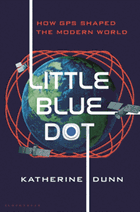
The ease of using the Global Positioning System, or GPS, is something most people take for granted. Friends are confidently informed, "The map says I'll be there in seven minutes." Families track each other's locations using services like Find My Phone or the Life360 app. In Little Blue Dot, London-based journalist Katherine Dunn takes readers on an exploration of the creation of GPS, making it evident how recent the ability to accurately locate one another is.
GPS technology took huge leaps forward during World War II, when Nazi bombers used radio signals to guide them to London, and again during the U.S.-Soviet space race. During the Vietnam War, the U.S. dedicated specific attention to developing a location system after the frustration of their forces failing for seven years to accurately bomb a major Vietnamese bridge.
Little Blue Dot, Dunn's first book, is both an invigorating history and a glimpse into the future of GPS usage, including its roles in climate tracking, military conflicts, artificial intelligence, and the commercialization of space. A whole new set of challenges are emerging too, as "spoofing" (faking a signal) becomes easier and rivals such as Galileo (Europe) and BeiDou (China) undermine the supremacy of GPS.
Dunn is an excellent guide through this shifting landscape. Her book's complex scientific material is accessible and packed with fascinating details for any reader curious about the technology's past and future. Much has changed in the last half century thanks to GPS, and it remains to be seen how the next 50 years will be changed by location technology. --Jessica Howard, former bookseller, freelance book reviewer