

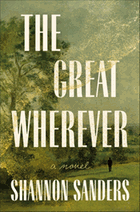
In Shannon Sanders's spirited first novel, The Great Wherever, living and dead members of an African American family converge on the ancestral land in Tennessee.
After their father, Micah Lamb, died, Bellamy inherited his suburban Washington, D.C., home while Aubrey's legacy was a part-share in the family farm. Thirty-two-year-old Aubrey works several dissatisfactory jobs and was recently dumped. She's happy to put her messy life on hold when Hays, her second cousin and farm co-owner (along with her father's cousins Darlissa and Samson), invites her to Tennessee to decide whether to sell. Aubrey's great-grandfather, Thomas Lamb, bought the farm in 1933 from a relative of the Lanyers, who enslaved the Lambs' ancestors--and now Lanyers want to buy the land back.
Feuds and family secrets animate the story. The novel's witty voice is instantly appealing: "Okay, but the afterlife? It's nothing like it looks in the movies." The narrator died at 27 when her car plummeted into the Potomac River. She and other family spirits--including Zena and Peter, who haunt the shores of the farm pond--comment on their living relations' decisions and hope to exert influence. Their huddles mimic the cousins' in the present day.
The Great Wherever is also an incidental companion to Sanders's debut linked short story collection, Company, which focuses on Aubrey's maternal family. There's an imbalance toward the historical here, although the contemporary and fabulist content holds the real energy. Still, it's a promising step for a writer who's channeling Ayana Mathis and George Saunders. --Rebecca Foster, freelance reviewer, proofreader, and blogger at Bookish Beck