

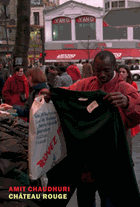
Paris is more than a moveable feast. It's an unlimited buffet that invites diners to select as much Paris as they want, and only the parts they desire. Those choices reflect upon the person making the selections, a concept Amit Chaudhuri (The Immortals; Sojourn) plays with in his movingly elliptical novel Château Rouge. In the years before the Covid-19 pandemic, an unnamed author of Indian descent arrives in the Château Rouge section of Paris to begin a fellowship. Any romance he felt about Paris dissolves when he enters his sublet, a grungy one-bedroom apartment that has, among other lowlights, a toilet bowl with "a history of staining." He's repulsed until his wife points out that this was the sort of place writers lived in during Ernest Hemingway's time. The romance returns, and he decides, however queasily, to give it a go.
As the novel progresses, the first-person narrator explores the richness and variety of the city. He notes his "sense of territories that flowed into each other," from the West African and working-class French neighborhoods to sections that are "bastions of wealth and privilege." That perspective is reinforced and complicated five years later, when he returns on a "research stop" for the book he's writing about Château Rouge, to see if the city is different, and how his impressions may indicate how he, too, has changed. "You see what you want to," the narrator says. Chaudhuri explores that truism with impeccable, lucid charm in this beautiful work. --Michael Magras, freelance book reviewer