

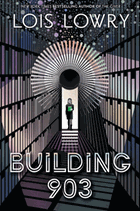
It has been nearly 15 years since Lois Lowry, author of the landmark 1994 Newbery Medal-winning The Giver, has returned to science fiction (Son). In the defiant middle-grade novel Building 903, Lowry uses a dystopian setting to highlight the values she has championed for 50 years: the right to personal autonomy, the need for communal action, and the importance of the book.
It's 2099, and 14-year-old Tessa lives in a society where all public spaces are monitored by a fascist police state dominated by Leader Zokiris. Despite his decades in charge, "most of the adult citizens despise... their leader." For Tessa, what matters most is that "things [run] efficiently" and she can stay under the radar. Her twin brother, Theo, however, is exceptionally curious and smart, designated X-Cogni-Superior. He and his father have been working together on a mysterious scientific project, until one morning Theo simply disappears. Tessa receives a clue that her eccentric, about-to-be-forcefully-retired next-door neighbor, Miriam, might know where Theo went. After Miriam leaves for ElderCare, Tessa and her parents must follow Miriam's clues to find Theo.
Although Building 903 doesn't have quite the nuance or creativity of Lowry's previous works, she offers young readers a dystopian future that is readily comprehensible and feels very timely. Building 903 asks readers to consider what they're willing to fight for, and reminds them that stories foster empathy and individual thinking. This middle-grade science fiction tale is an excellent example of Lowry's dedication to freedom, community, and the power of reading. --Siân Gaetano, children's and YA editor, Shelf Awareness