

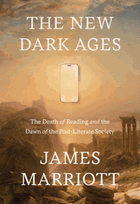
What a difference a few centuries can make. According to James Marriott, a journalist for the London Times and the author of the lively but heartbreaking jeremiad The New Dark Ages, "reading is dying." It wasn't always so. Johannes Gutenberg's printing press, invented in the 15th century, "opened the way for the mass circulation of books." By the 18th century, "everyone, everywhere, had started reading." Fast forward to the 21st, however, and English literature students at U.S. colleges have "struggled to understand the first paragraph of Dickens's novel Bleak House." What's a concerned bibliophile to do? Marriott's answer, winningly if ironically, was to write a book.
It's a good one. Marriott believes in the supremacy of the written word. Over the years, he's seen video win the battle for command of attention spans. He cites several villains, but for Marriott, the biggest is the smartphone. He asserts they represent "the greatest theft of knowledge from ordinary people in history" and "smartphones are dangerous because they are much more effective predators of our attention" due to their "sheer ubiquity."
There's much more to Marriott's argument, including his concern that video's triumph constitutes a threat to democracy, which he says is unsustainable without the reasoning skills literacy fosters. One could have a vigorous debate over whether smartphones are inherently more corrosive than, say, the equally ubiquitous penny dreadfuls of the 19th century. That this book raises the question in the first place, however, is to its credit. Like-minded souls won't be cheered by this exceptional work, but it's always nice to know one isn't alone. And that's something the centuries haven't changed. --Michael Magras, freelance book reviewer