

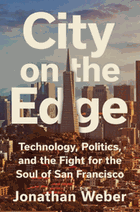
Whether because of its spectacular location, its cultural significance, or simply its romantic image, San Francisco has always occupied a distinctive place in the American mind. In assessing its contemporary relevance, reporter Jonathan Weber has had a front-row seat since 1990, when he was named the first Silicon Valley correspondent for the Los Angeles Times. The product of his close observation is City on the Edge, a well-informed, granular account of San Francisco's history since 1990, and a portrait of how it has served as a microcosm of some of the fundamental changes occurring in U.S. society during that time.
Much of the story of San Francisco's last 35 years inevitably centers on the tech industry, beginning with the 1990s dotcom boom and its spectacular bust in 2000. The book is peppered with the origin stories of now-iconic companies with local roots, including Twitter, Uber, and Airbnb. But even as the tech-fueled fortunes of the city followed a decidedly upward trajectory, it faced persistent issues of homelessness and drug addiction and crime, along with rapidly rising wealth inequality and gentrification.
As he narrates this story, Weber juggles a large cast of noteworthy characters, including Mayors Willie Brown and Gavin Newsom and businessman/philanthropist Warren Hellman. For non-San Franciscans, there will be moments when City on the Edge veers too deeply into the narrow byways of the city's often Byzantine politics, but Weber usually doesn't linger overlong there. With all its triumphs and travails, it is impossible to leave this account without a strong sense that what Weber calls the "boom-and-bust cycles" of San Francisco life are destined to repeat yet again. --Harvey Freedenberg, freelance reviewer