

|
|
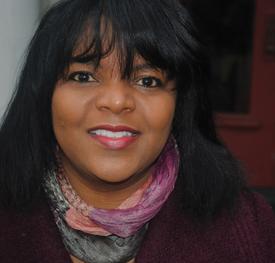
| photo: Bob Watts | |
Stephanie Powell Watts is an associate professor of English at Lehigh University in Pennsylvania, and has won a Whiting Award, a Pushcart Prize and the Southern Women's Writers Award for Emerging Writer of the Year. She is the author of the short story collection We Are Taking Only What We Need. Her debut novel, No One Is Coming to Save Us, was published by Ecco on April 4, 2017.
On your nightstand now:
Colson Whitehead's Underground Railroad, Homegoing by Yaa Gyasi, Tana French's The Trespasser (recommended by my husband). I like to keep a couple of books going at a time. So often I find that one book is speaking to another in fascinating ways.
Favorite book when you were a child:
When I was very young, I read William Steig's Sylvester and the Magic Pebble. This book delighted and haunted me. Sylvester makes a strange wish out of his fear in the moment that erases him from the community (literally) and especially from his parents. I ached for Sylvester and his parents. I hope that fear (legitimate fear--Sylvester faced a lion) does not cause us to lose ourselves and everything we cherish in our mean old world.
Your top five authors:
This is a list that is always changing but here are a few books I love by a few authors I love:
Edward P. Jones is my hero. His writing is wise, lyrical, funny and gut-wrenchingly honest. Start with Lost in the City and read everything else.
Elizabeth Strout's Olive Kitteridge is a phenomenal work. Olive is so dislikable and sad and haunted. The chapter when she visits her grown son kills me--so cringe-worthy and true. Get out of my head, lady. But I do love that pain.
I was sick and jealous and unworthy after I read Jennifer Egan's A Visit from the Goon Squad. To keep going, I kept repeating to myself, It really isn't that good. But it is.
When people ask me what writers are doing amazing things with the short story, I direct them to Antonya Nelson's Funny Once, Junot Díaz's This Is How You Lose Her and Alice Munro's Hateship, Friendship, Courtship, Loveship, Marriage. These are all books I routinely give as gifts.
Book you've faked reading:
I once told a friend that I had seen the Kevin Costner movie Dances with Wolves. I have no idea why I said that. I have never seen that movie. So I've probably claimed to have read any number of books that I haven't finished (or started). I use to claim to have read the Bible, but I know I skipped over many, many of the begetting chapters. 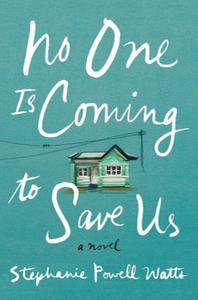 Book you're an evangelist for:
When I was 16, I read John Updike's Rabbit, Run. It was an old book by then and I was way behind the tide, but I'd heard about it and was curious. Rabbit Angstrom, the main character, was 26 and married, about to be a father. He felt old and was afraid that his life was following a sad, predictable trajectory. I hated him. I hated his journey. I was a kid and sure that life had many wonders in store without ennui and navel-gazing angst. I told everyone I met how terrible I thought the book was. Then I turned 26 and then 30 (that is all I'll admit to) and felt some of the same worthlessness and despair. What did I desperately want to do then? Run like hell. I kept a library title card--"Rabbit Run Updike, John"--in my pocket and then on my desk for years as a reminder that what you feel now you might not always feel. I needed to tell myself that even a misogynist, racist-lite character from nowhere Pennsylvania could show me something good and necessary about living a life.
Book you've bought for the cover:
I love to shop at thrift and secondhand stores. I tell myself that I like the idea of the storied lives of the objects I find, but really I'm just cheap. A few years ago at a store called Carolina Thrift in Greensboro, N.C., I came across a treasure trove of books of short fiction. Downsizing or death (the ultimate downsize) meant that someone had cleaned out his or her library and beautiful books by Andre Dubus, Rick Bass, Bobbie Ann Mason, Rick Moody, Lee Smith. The one that caught my eye and made me keep digging for the others was Ellen Gilchrist's Victory over Japan. A young red-headed woman sits up in a lovely daybed. She does not look at you or acknowledge your existence, but her mean-eyed black cat stares directly into your eyes. You have been seen. The cover was aware and oblivious to the reader. I loved that.
I am also a big fan of Helen Oyeyemi's books and her covers. Boy, Snow, Bird with the flowering snake is a knockout.
Book you hid from your parents:
I spent most of my youth as a Jehovah's Witness. My mother and one of my four brothers are still active in the faith. Religious people understand the power of an insistent idea. They know how an idea turned belief can transform a mind and direct a life. It is of course the job of a parent to shelter, support and direct a child. Though we were very religious, my mother did not censor what I read. She did call Judy Blume's Forever trash (a scene that played out in many households that I knew) but she didn't stop me from reading it.
Book that changed your life:
Edward P. Jones's Lost in the City was and is an inspiration to me. Jones's writing showcases the lives of ordinary black D.C. residents in their everyday working, school and home existences with such love, respect and compassion. The characters are not members of the elite or moneyed classes, but representative of the millions of men and women who worked for the betterment of their children with little hope of seeing that better world themselves. People like Jones's mother, like my grandmother, like so many of the people I know and have met and admire for their vigor, their heart and their sheer unwillingness to give up. Jones's work is not easy; however, he shows me that no one is fully knowable and in every life there are tricks and secrets and Bluebeard doors only the bravest among us should open. Jones opens those doors. Thank God for that.
Favorite line from a book:
In a great writer's sentences there are worlds. Here are just a few I love:
"In an otherwise unremarkable September morning, long before I learned to be ashamed of my mother, she takes my hand and we set off down to begin my very first day of school." --from "The First Day" by Edward Jones
"Stop picking around the edges of the world. Take advantage, and if you can't take advantage, take disadvantage. We live here. On this planet, in this nation, in this county right here. Nowhere else! We got a home in this rock, don't you see! Nobody starving in my home; nobody crying in my home, and if I got a home you got one too!" --from Song of Solomon by Toni Morrison
"Gatsby believed in the green light, the orgastic future that year by year recedes before us. It eluded us then, but that's no matter--tomorrow we will run faster, stretch out our arms farther.... And then one fine morning-- So we beat on, boats against the current, borne back ceaselessly into the past." --from The Great Gatsby by F. Scott Fitzgerald
Five books you'll never part with:
Edward P. Jones's Lost in the City, Toni Morrison's Song of Solomon, J.D. Salinger's Nine Stories (this was the first gift my husband ever gave me), Gayl Jones's The Healing, John Updike's Rabbit, Run, Rita Dove's Thomas and Beulah and F. Scott Fitzgerald's The Great Gatsby.
Book you most want to read again for the first time:
Gayl Jones's The Healing was a revelation to me when I read it first, about a decade ago. The narrator is strange and spends a lot of time in her head, concocting conversations and creating alternate realities. Jones isn't afraid of revealing important truths about sex and racial power and violence that her main character witnesses and endures. The book is an experience. I don't know anyone else that writes like Gayl Jones.