


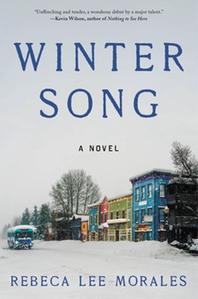
 Rebeca Lee Morales's first novel, Winter Song, is quietly astonishing.
In the deep, cold winter of 1986, in a small Minnesota town, police chief Gordon Trent sits alone in the cold house he shared with his late wife, pondering his approaching retirement, which he intends to delay as long as possible. He shares cold toast with the dog, attends the scene of a death by apparent suicide, and visits with an old friend, a retired fellow officer. Then the narrative shifts to focus on Byron Lugo as he is released from prison. Now 26, Byron has served his time for vehicular homicide: a hit-and-run for which Byron is very sorry, but he has always maintained his innocence. Having regained his freedom, he is determined to get his life back: job, car, house, fiancée--although the latter has married someone else. Trent's belief in justice is, more than ever, what gets him through his work and his life; Byron's insistence that justice has not been served is unwavering. The two men persist in calm, polite, staunch disagreement, until one of them is proven correct, and lives are once again upheaved.
The town that serves as backdrop, Montevideo--known as Monte--is as clearly portrayed as any of its residents, who make up a cast of colorful, flawed, but sympathetic men and women laboring at a no-frills, working-class existence. These include the woman who runs the thrift store, Byron's soft-spoken father, a diner waitress, and Byron's small but unwavering group of friends. The novel's action rises to bar scenes with dancing and pool, a demolition derby, and an act of startling violence. But much of its greatest drama takes place in subtler moments: conversation, reflection, the pulling back of a covering drape. With grace, humor, and wise observations of human behaviors, Winter Song examines what everyday people can and cannot, or will not, live with; forgiveness, justice, friendship, and community; and the question of whether a fresh start is truly possible.
Morales has captured an American town and the human condition, in all their wounds and splendors, and in simple dignity. With deceptively deep focus and nuance, she applies an attention to detail that exalts even snow in "heaping begrimed ramparts" and the stark struggles of humble existence. For all its many tragedies, and a good dose of dramatic irony, this novel is searingly beautiful and surprisingly hopeful in the end. --Julia Kastner, blogger at pagesofjulia
Shelf Talker: During a small-town Midwestern winter, a young felon who proclaims his innocence and a police chief nearing retirement face off in this debut novel of hard questions and strange loveliness.