

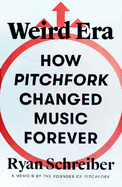
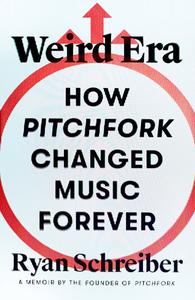
 Weird Era by Ryan Schreiber tells the story of a time period in which indie music fandom stole cachet and clout from established media giants. Founded in 1996, Pitchfork took hold as the most feared and lauded music publication of the early Internet age, becoming the arbiter of cool for an entire generation of indie music lovers. Pitchfork was capable of launching an unknown act (e.g., Sigur Rós from Iceland) into sold-out venues and surprising sales numbers; it was the first publication to grasp that the Internet had changed not only how music criticism could be distributed but also how it might be conceived and democratized.
Leading the operation was an accidentally entrepreneurial music obsessive from Minneapolis, Minn., named Ryan Schreiber, who at 19 created a website to review music because he figured if he didn't, someone else would. Schreiber wasn't a trained writer or editor; he was a fan with opinions and, most importantly, enough early-Internet savvy to understand that the Web rewarded volume and specificity.
Schreiber's memoir documents the site's conception in his childhood home, its move to Chicago in 1999 and then Brooklyn in 2011, and acquisition by Condé Nast in 2015. Where other publications used stars or letter grades, Pitchfork decided that a 10-point scale with a single decimal place was more precise and therefore would spark more discussion and engagement. A 9.7 for Arcade Fire's Funeral in 2004 praised the album, helped break sales records for the label, and garnered a record-breaking number of visitors for Schreiber's website. At Pitchfork's peak in the mid-2000s, a positive review could be more valuable to an indie band than just about anything else. The list of careers galvanized and accelerated by a Pitchfork number score reflects the lion's share of a decade of indie rock history. Schreiber's voice is wry, entertaining, and honest about the line the publication sometimes crossed between taste-making and hectoring, and about his own complicity in a culture that was occasionally as mean as it was rigorous.
Pitchfork's eventual sale to Condé Nast looms over the book's final section, and Schreiber writes about it with the kind of candor that distance allows. He details his sinking recognition that the corporate machinery he'd spent his adult life outrunning had become the only path forward. Expansion projects that had been promised support were shuttered, true believers departed or were let go as the site was absorbed into GQ in 2024. It makes a genuinely melancholy ending to what had been an improbable ride.
Weird Era is compulsively readable, frequently funny, and unexpectedly moving. Even readers who spent years arguing about Pitchfork's scores will find themselves grateful it existed. --Elizabeth DeNoma, executive editor, DeNoma Literary Services, Seattle, Wash.
Shelf Talker: Weird Era, the memoir by Pitchfork founder Ryan Schreiber, is a testament to the strength of youthful passion and fandom to change the cultural landscape.