

|
|
|
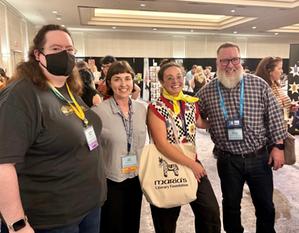
(from l.) BINC's Jennifer Rojas and Kate Weiss; winner Kate Suazo of Maria's Bookshop, Durango, Colo.; and Michael McKnight, Basil Bookseller Software |
|
Following four days of author breakfasts and luncheons, rep presentations, peer-to-peer discussions, and fun literary mixers, the Mountains & Plains Independent Booksellers Association FallCon ended on Wednesday. This year's conference was attended by 533 people, including booksellers, librarians, authors, volunteers, staff, and other industry workers. More than 250 of those were booksellers and librarians, with more than 50 first-timers, according to Heather Duncan, executive director of the MPIBA. The organization currently represents 381 bookstores, with 132 of those present at FallCon. Shelf Awareness was among the 134 vendors, publishers, and industry service providers present in the show's exhibit hall.
Binc held its annual heads-or-tails fundraiser during the final moments on the MPIBA show floor, with Michael McKnight of Basil Bookseller Software as official coin tosser. Contest winner Kate Suazo of Maria's Bookshop in Durango, Colo., won a $500 gift card and a Book Club Starter Kit box of books. All tallied, the fundraiser earned $1,018 for the nonprofit.
---
|
|
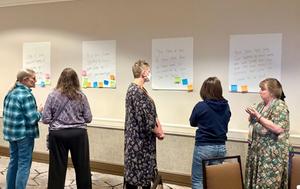
| Booksellers problem-solving | |
Wednesday morning's education sessions shared practical strategies for maximizing store resources, enhancing customer interactions, and seizing opportunities for digital sales.
An interactive session called "Booksellers Are the Bookstore," moderated by Zareef Chowdhury, marketing and communications coordinator for MPIBA, prompted booksellers to solve dilemmas through four mainstays of the trade: handselling, displays, shelf-talkers, and community building. Each sample problem was presented on a large sheet of paper hung around the room for attendees to consider and address quietly with color-coded sticky notes before Chowdhury brought the issue before the larger group for further discussion.
"It is now October, spooky and horror book season, this is NOT your wheelhouse," was one topic. It generated ideas about deferring to staff members who may be more familiar with the genre, suggesting they develop a display or a brief list of go-to titles, and even inviting customer recommendations.
If a buyer's purchasing reflects the desires of the community but individual bookseller tastes veer further afield, the standout suggestion was to introduce some friendly competition among staff to sell the most stock.
One of the more serious scenarios considered how working directly with local schools might be impeded by changing legislation. Answers trended toward reaching out to teachers and parents, who are allowed to do whatever they want in their free time; to circumvent the institutional issue with classroom wish-lists on e-commerce sites; and fundraiser events that highlight educator recommendations.
Meanwhile, another dilemma imagined a nearby bar's happy hour driving up foot traffic but producing few sales. Solutions included open collaboration with the neighbor for coupons or discounts valid during the designated timeframe.
For situations in which people browse the sales floor but purchase from Amazon, cute pictures of pets can be a non-confrontational reminder to customers about how buying local helps keep furry friends fed. And displaying QR codes for Bookshop.org and Libro.fm can inform them that your store is just as accessible online.
---
 |
|
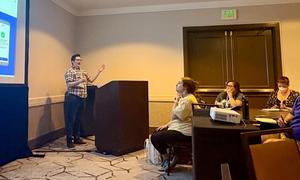
| Libro.fm's Lee Hooyboer | |
In a later session called "Sound Investment: Maximizing the Libro.fm Revenue Stream," senior manager of bookseller partnerships Lee Hooyboer elaborated on how stores can benefit from audiobooks. The presentation emphasized the company's commitment to making integration as easy as possible for booksellers by focusing on sustainable and low-effort strategies to increase digital sales.
"Audiobooks will not save your bookstore," Hooyboer stated, but the thin margins of bookselling makes any move of the needle meaningful. With no cost of goods required, Libro.fm can be a purely additive revenue stream. It's also not in competition with print sales. Most in-store customers want printed books, while audiobook customers want audio. But many of them don't know that they can get audios through indies, so prioritizing their awareness is crucial.
The single most actionable thing a store can do is drive up bookseller engagement by signing them up for accounts, where they'll gain access to all available ALCs. Booksellers tend to handsell whatever they're reading, so access to audio fosters professional development as well as word of mouth.
Beyond that, Libro.fm makes a wealth of information and materials, including bookmarks and signage, available to partners free of charge to help raise customer awareness and boost that bottom line. --Dave Wheeler, senior editor, Shelf Awareness