

Hilary McPhee, a legend of the Australian literary industry who nurtured the careers of writers including Helen Garner and Tim Winton, died on October 1. She was 85. The Sydney Morning Herald reported that McPhee Gribble, the publishing house she founded with Diana Gribble in 1975, "shaped a generation of iconic Australian writers--among them Kathy Lette, Dorothy Hewett, Kaz Cooke, Drusilla Modjeska, Jennifer Dabbs, and John Misto. Their slate of influential novels includes Winton's Cloudstreet, Garner's Monkey Grip, and Lette and Gabrielle Carey's Puberty Blues."
 |
|
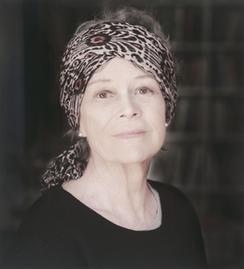
| Hillary McPhee (photo; Jacquelne Mitelman) |
|
"I published my first four books with McPhee Gribble. Hilary was a fine editor. I'll always be grateful for that," said Garner.
Lette added: "Hilary was the Boudicca of the book world, championing women's writing and defending our work. She went into battle for us, armed with a sharp intellect and cutting tongue. But behind the scenes, she was also adept at gentle nurturing. When Puberty Blues had been turned down by every publisher, Hilary (and Di Gribble) had the fierce feminist courage to publish the book and ride the seismic shock wave it sent through Australian society. We have lost a pioneering, passionate publisher and a warm and wonderful woman."
Because Winton worked from Western Australia, much of their decades-long partnership unfolded through letters, right up until just before her death. "Her handwriting is very familiar to me, it was always pencil on the page, and she was a sensitive and canny editor," he said. "She knew when to push, and she was someone you could trust," he said.
Together, McPhee and Gribble were "trailblazers in the old boys club of Australian publishing," the Morning Herald noted. As McPhee wrote in her memoir Other People's Words (2019): "The strong men in publishing liked to call in the late afternoons with bottles of wine and kindly advice: stick to packaging, do horse books or ballet books... put together some recipes... get a good-looking, famous sheila to front them for you...."
Nikki Christer, a publisher who inherited Picador from McPhee, described her predecessor and mentor as an editor with a "deep respect for the writer's voice.... She was part of a generation that transformed Australian publishing. When she and Di created McPhee Gribble, it was largely dominated by overseas publishers and imported books. And so she helped create a publishing culture that put Australian writers and therefore Australian stories at the center."
McPhee and Gribble published hundreds of titles under their imprint, including those of young Indigenous authors, and fostered the fledgling careers of editors and publishers like Sophie Cunningham and Sue Hines.
Speaking to the Morning Herald in 2022, 46 years after a then unknown Helen Garner walked into their offices, McPhee recalled: "Helen arrived one day on her bicycle with two copies of the manuscript of Monkey Grip in green foolscap folders. This is what writers did in those days, you gave publishers two copies. Di and I each took a manuscript home, read it overnight and rushed in the next day and said we've got to publish it."
In 1979, McPhee, Gribble, Joyce Nicholson, Anne O'Donovan, and Sally Milner founded Sisters Publishing, a mail-order feminist book club that published poetry and fiction "by women, for women." By the 1980s, recession hit the Australian publishing industry and they signed a co-publishing deal with Penguin before selling McPhee Gribble entirely to Penguin in 1989.
McPhee stayed on for a few years before moving to Pan Macmillan, where she ran the Picador imprint until 1994 when she was headhunted by then prime minister Paul Keating to become the first female chair of the Australian Arts Council. She was made an officer of the Order of Australia for her services to the arts and literature in 2001.
McPhee's other books include the memoir Other People's Homes; Wordlines (2010), a selection of contemporary Australian writing; and an annotated edition of filmmaker Tim Burstall's 1950s diaries, Memoirs of a Young Bastard.
"The Australian publishing industry may not look quite the same as it did in 1976, when McPhee entered the scene, but it's no doubt all the better thanks to her sharp eye and fierce belief in the people who make it what it is," the Morning Herald wrote. "Her enormous legacy lives on in the pages of Cloudstreet, The Children's Bach (McPhee's favorite of Garner's works), and countless others."