 |
| photo: Bart Nagel |
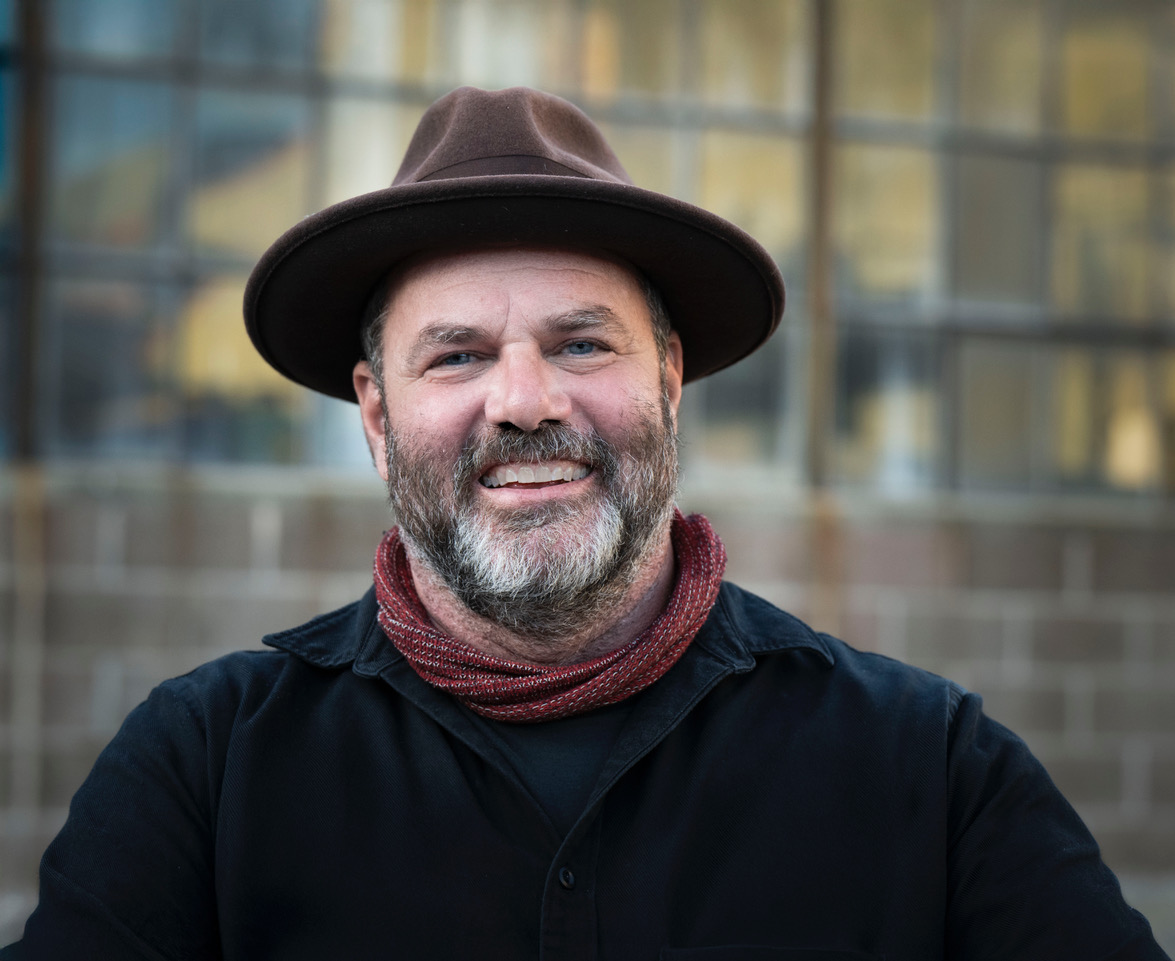
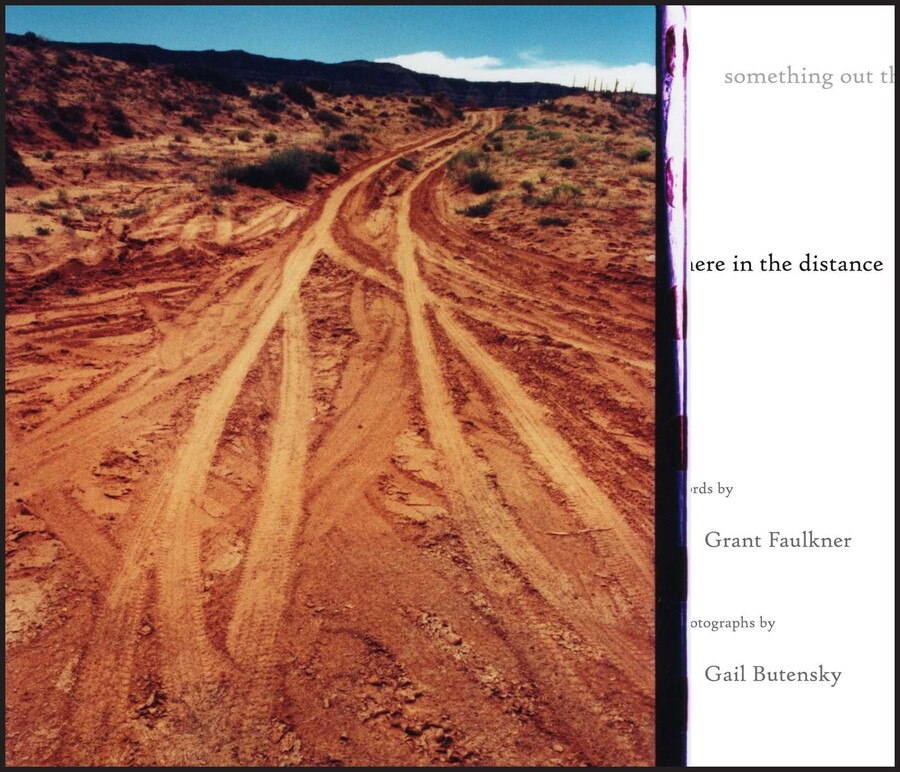
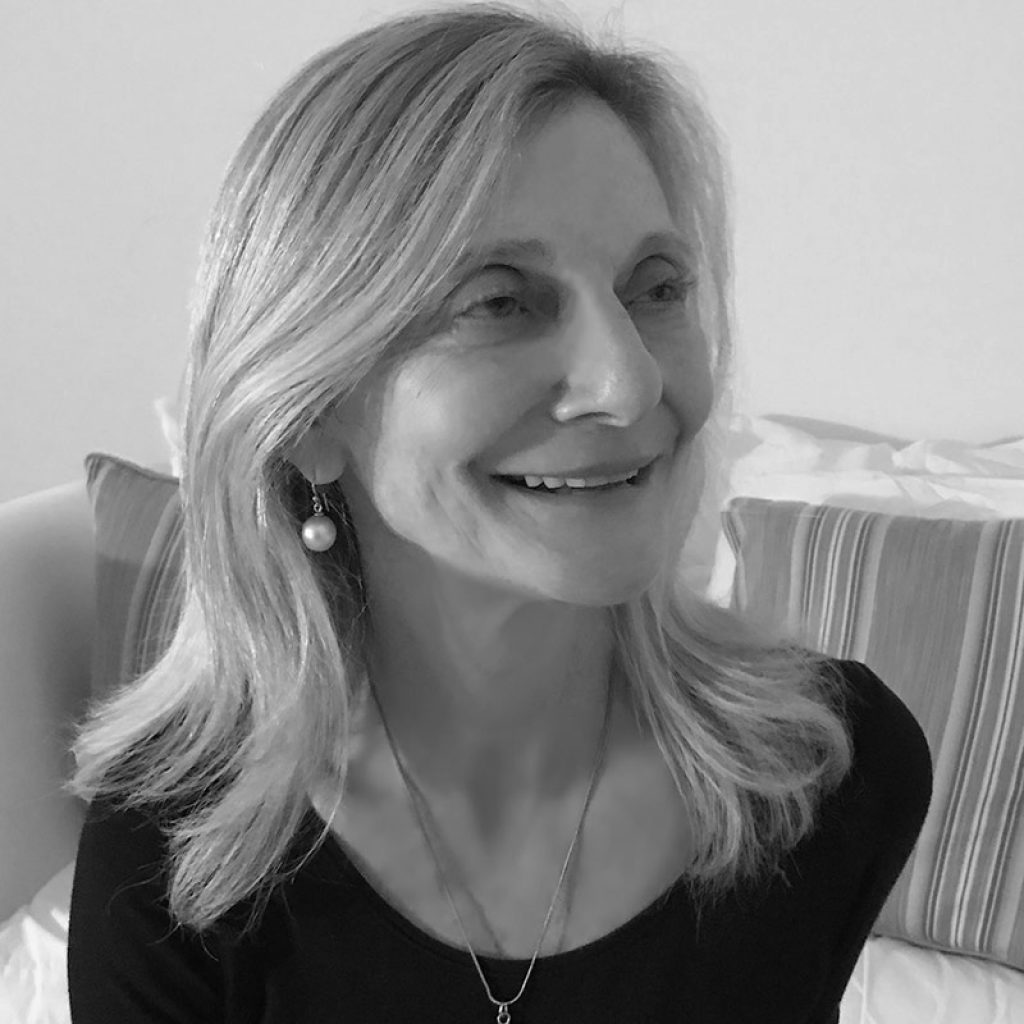
Grant Faulkner is the co-founder of Memoir Nation, co-founder of the Flash Fiction Institute, co-founder of 100 Word Story, and an executive producer on the upcoming reality TV show America's Next Great Author. He has published several collections of stories and books on writing. His "flash novel" something out there in the distance (Unm Press) is a linked series of short-short stories that weave their way through photos by Gail Butensky.
Handsell readers your book in 35 words or less:
Have you ever read a novel whose stories flow from photos? A story that is a prose poem? A book that is like watching a film? Read something out there in the distance.
On your nightstand now:
The Use of Photography--Annie Ernaux and Marc Marie's book of photos and stories about their affair 20 or so years ago, translated by Alison L. Strayer. I love Annie Ernaux. I love books about affairs and love. And I love stories told with photos (as evidenced by my book something out there in the distance).
Rilke's Book of Hours: Love Poems to God, translated by Anita Barrows. I love his dreamy, searching writing, the way he writes to the questions, not the answers, in a melody of words.
Andrea Gibson's Lord of the Butterflies. I've been obsessed with them since they died last summer. Their writing, their life--their capacity to feel so deeply and express deep feelings in such an emotional yet unsentimental way.
Favorite book when you were a child:
I was an avid reader from the start. I wanted to be President of the United States when I was a kid, so I largely read biographies of Presidents when I was in grade school. Then I became captivated with the Little House on the Prairie books by Laura Ingalls Wilder when I was 11 or so.
I think the best art is art that you experience before you're supposed to, though. I "accidentally" read Crime and Punishment when I was researching a paper on crime for a class in the ninth grade. I didn't know who Fyodor Dostoyevsky was, but I was intrigued by his name. It was my introduction to sin in literature. My introduction to a godless world. I'm haunted by Rodion Raskolnikov.
So to answer your question, it's a tie between a biography of Ulysses S. Grant, the Little House on the Prairie series, and Crime and Punishment.
Your top five authors:
F. Scott Fitzgerald because I read him during a semester in France, the semester I decided to be a writer. I thought I'd be an expat writer living in glorious places, cavorting through many a drink, and writing novels. My life has sadly been more ordinary.
James Salter has been described as a writer's writer, and I learned the importance of rhythms and moods and contours from his sentences.
Denis Johnson is a writer whom many writers try to imitate but always fail. Menacing. Absurd. Funny. Tender. Desultory. Hallucinatory. Religious. Poetic. I still try to imitate him.
Sigrid Nunez is a writer whom you read to be with, to think with, as if you're taking a walk with her. So intimate, so wise.
Nathalie Sarraute focuses on capturing the "tropisms" of life: the spontaneous, subconscious, and fleeting internal movements that occur during human interactions. She has formed my aesthetic as much as anyone.
Book you've faked reading:
I've never faked reading a book, but I like to joke that almost every writer I know, including me, has a copy of Infinite Jest by David Foster Wallace on their bookshelves but has never read it. I no longer even plan to read Infinite Jest.
Perhaps a better answer is that The Savage Detectives (by Roberto Bolaño, translated by Natasha Wimmer), is one of my favorite novels, but I've failed to finish it in two attempts. I've only read the first half. It's an amazing first half of a novel.
 Book you're an evangelist for:
I could easily say Nunez's The Friend, Johnson's Jesus' Son, Paul Bowles's The Sheltering Sky, or Malcolm Lowry's Under the Volcano, all of which I've given as presents innumerable times, but I'm going to go with A Lover's Discourse by Roland Barthes and translated by Richard Howard because I'm obsessed with thinking about love, which we should all think about more.
It's really a rejected lover's discourse. The book was spawned by the forlorn love letters that Barthes wrote to a man whom he had an affair with. The book is structured as a collection of 80 short chapters, or "fragments," each dedicated to a different type of amorous feeling, such as waiting or jealousy. He creates a piercing portrait of a lover's fevered consciousness.
Book you've bought for the cover:
When I first moved to San Francisco in 1989, it seemed that Kathy Acker books were everywhere, and her covers often featured the body, nude or seminude, reflecting her themes of female desire, power, and identity. The covers were daring and subversive and punk and brash. How could I not read her?
Book you hid from your parents:
I never had to hide a book from my parents, but there was one book I hid from myself. I bought the Necronomicon when I was a teenager because I was interested in the occult and mysticism, and this book cried out to me with a sinister siren's song at the Waldenbooks in the Merle Hay Mall in Des Moines, Iowa. Every time I went to Des Moines, I found myself looking at it, but too afraid to open its pages. Even after I bought it, I never opened it up. I was too scared of it.
I just Googled it, and I see it is a fictional book of spells and incantations from the horror stories of writer H.P. Lovecraft. I didn't know who Lovecraft was as a teen.
Book that changed your life:
The aforementioned Crime and Punishment very deeply immersed me in the complexities, contradictions, and darkness of the human spirit--and showed me how deep needs and obsessions can smother a person's more reasonable and generous side. I quit believing in God around this same time, and I haven't viewed life the same since then: everyone carries some sort of sin with them.
But on a more hopeful note, when I was 20, I studied in France and decided to be a writer, and one of the expat books I read was Ernest Hemingway's A Moveable Feast.
I am from a small town in Iowa, so the idea of being an author, living in exotic places, and dedicating all aspects of my life to my art was quite foreign to me. I read the book as a type of instructional manual to writing, and then I returned home and lived in a renovated chicken coop that summer and carried out Hemingway's creative process.
Favorite line from a book:
Sigrid Nunez said that all stories are about loss in some way, and I ponder this often.
In The Friend, she wrote, "What we miss--what we lose and what we mourn--isn't it this that makes us who, deep down, we truly are."
I loved her "trilogy on loss," comprised of The Friend, What Are You Going Through, and The Vulnerables.
Five books you'll never part with:
Just to add five more to the mix mentioned above--all of which I've reread many times:
Under the Volcano by Malcolm Lowry, which took me to Mexico several times.
The Stranger by Albert Camus, my first book by an existentialist.
Love in the Time of Cholera by Gabriel García Márquez, because it made me cry more than any other book.
The Sheltering Sky by Paul Bowles. I love his meditation and fascination with the desert, the ultimate Bowles metaphor. I love how the book shows what can happen when people are unanchored, drifting, elsewhere, not truly knowing where they want to be.
Open City by Teju Cole, because I love a story about a character walking around and noticing and thinking. The book uncovers layers of a city, layers of a traumatic personal and collective history. It opens and keeps opening.
Book you most want to read again for the first time:
Most of my transformative reading happened in my teen years, when books shaped all of my perceptions, thoughts, and dreams. Let's say Steppenwolf by Hermann Hesse for its dark mysticism, or On the Road by Jack Kerouac because nothing makes me happier than a road trip. I haven't reread either of these books because I don't want to blemish my teen impressions. I don't want them to disappoint me.


SHELFAWARENESS.1016.B1.TOTALHOMEANDGIFTMARKET.gif)






SHELFAWARENESS.1019..TX.TOTALHOMEANDGIFTMARKET.gif)
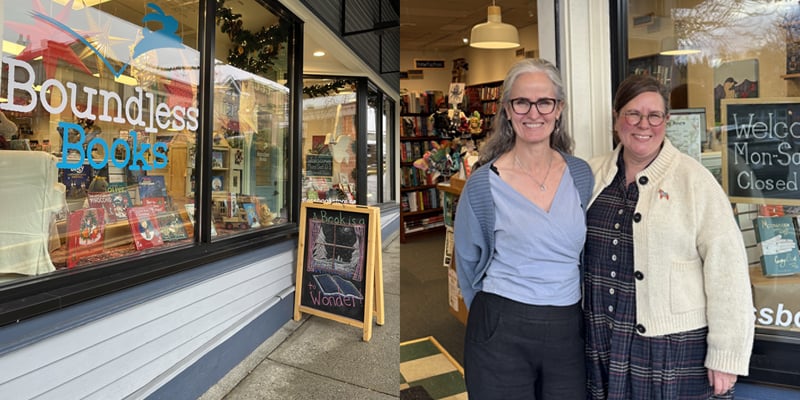
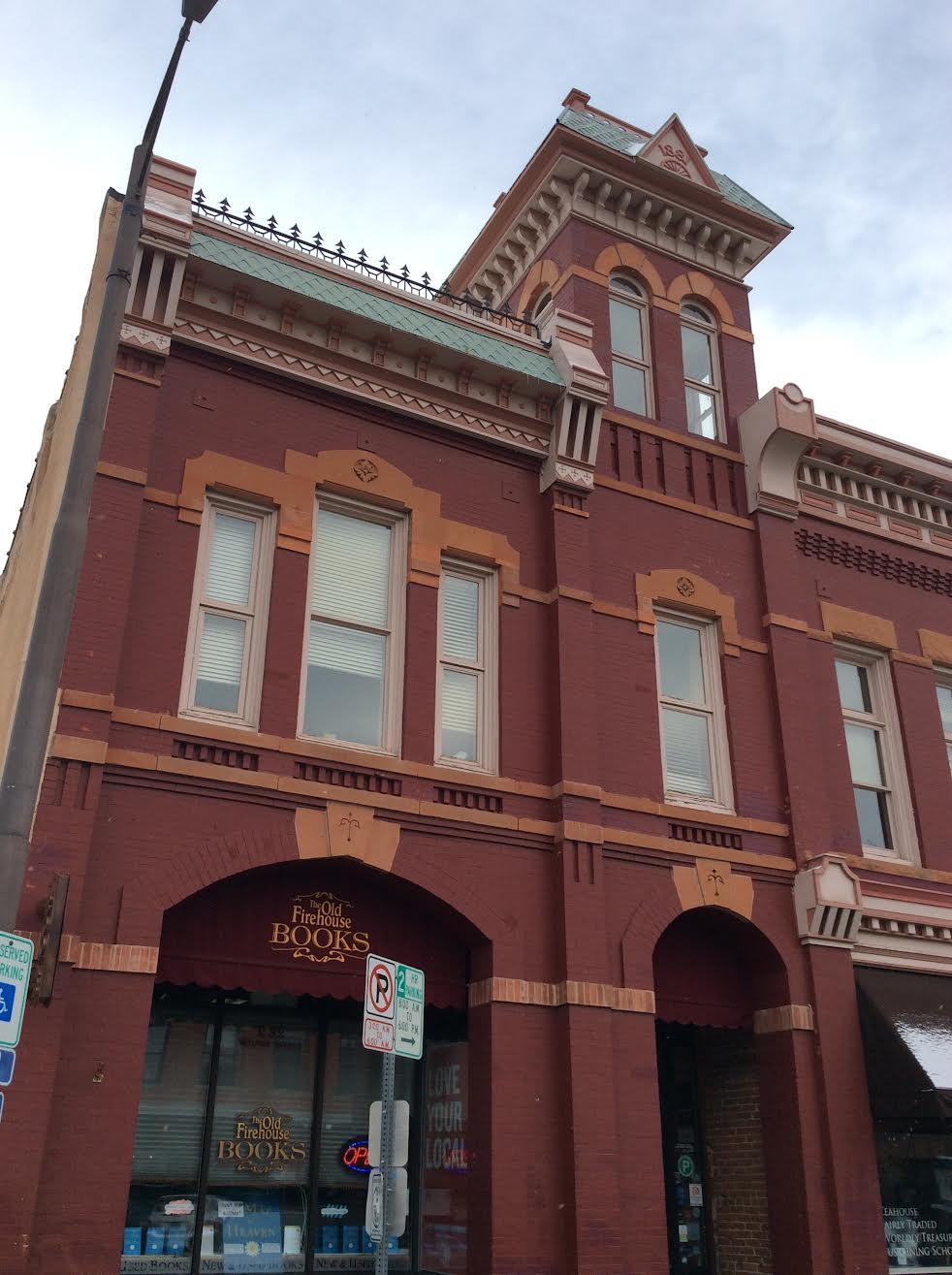 Susie Wilmer, longtime owner of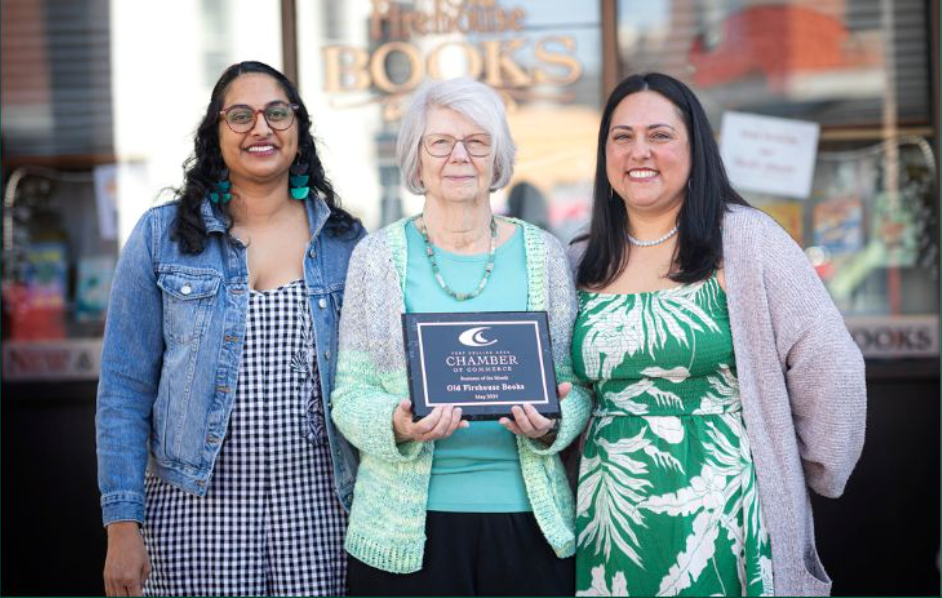
 The harsh overall economic situation is having an impact on the German book market, with turnover across the central sales channels (retail bookstores, e-commerce including Amazon, railroad station bookstores, department stores, electronic goods stores, and drugstores) falling by 2.9% in 2025 compared to 2024, according to findings of the industry monitor BUCH report, which were released by Börsenverein des Deutschen Buchhandels (the German book trade association).
 In its latest "
.jpeg)
 "
"

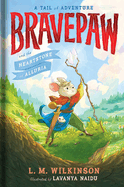
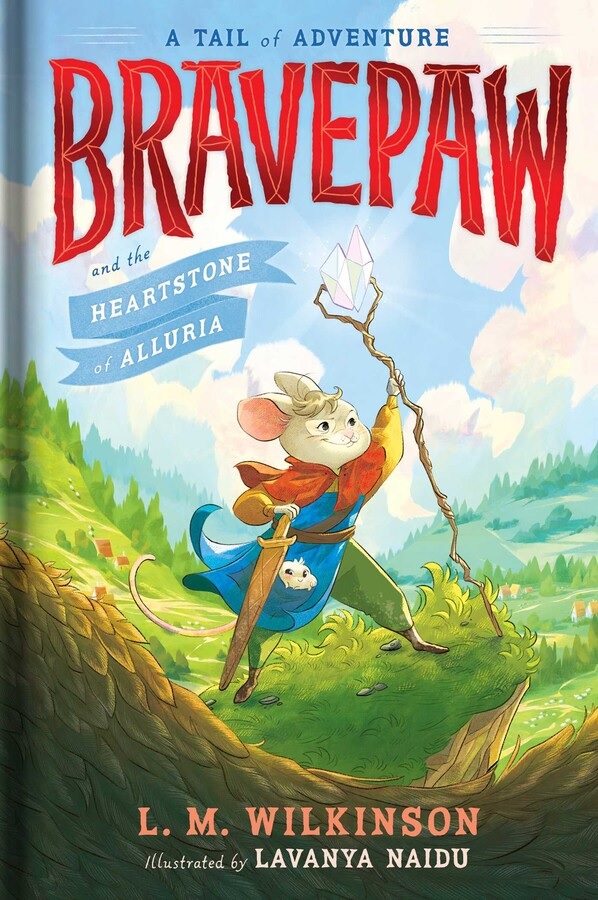 Bravepaw and the Heartstone of Alluria, originally published in Australia in 2024, is the first in a darling and adventurous series for younger middle-grade readers by author L.M. Wilkinson and illustrator Lavanya Naidu.