

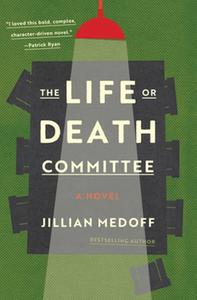
 According to data from the National Institutes of Health, of the 800,000 Americans suffering from end-stage kidney disease in 2023, some 68% were receiving dialysis. That wasn't the case in 1961, when an anonymous group of seven Seattle residents convened to consider applications from desperate patients to participate in a program that made long-term dialysis possible for the first time. In The Life or Death Committee, Jillian Medoff (When We Were Bright and Beautiful; This Could Hurt) effectively blends fact and fiction to explore the complicated ethical dimensions of that group's work. She enriches her account with a gallery of well-crafted portraits of invented characters representing the real-life people charged with the awesome responsibility of granting some patients a chance at life and sentencing others to certain death.
Beginning in September 1961, a handpicked committee meets every Thursday afternoon in a small library at Seattle's Swedish Hospital. Six men--a city councilman, a banker, a lawyer, a surgeon, a pastor, and a labor leader--along with a single woman, identified as "the housewife," all of them white, to evaluate applications for the three beds initially available in the hospital's dialysis unit. The committee's early work involves developing a set of criteria to guide its decision-making, but as Medoff reveals, the effort to apply seemingly objective standards to frankly impossible choices quickly breaks down.
The actual committee didn't keep records of its deliberations, but Medoff's re-creation of what must have been at times contentious discussions feels plausible. Her literary skill is most evident in the chapters she devotes to illuminating the lives of each of her committee members. Their stories move the novel far afield from the decisions about which patients will get a spot, but as she reveals the members' distinctive experiences, the challenges of tasking ordinary human beings with these fateful choices emerge. To cite but one example, Medoff evokes the casual but at times overt racial, religious, and gender biases that must have entered into the discussions of these white, middle-class Seattle residents--shocking to 21st-century readers, but less so in that era.
The modern American health care system has many problems, but rationing dialysis for critical kidney disease is no longer one of them. That doesn't mean that hard choices about medical care have disappeared. As Medoff shows in brief scenes drawn from the Covid-19 pandemic that bracket her main story, decisions about allocating scarce medical resources continue to fuel the field of bioethics. The Life or Death Committee credibly illustrates one early approach to this vexing problem and the efforts made to solve it. --Harvey Freedenberg, freelance reviewer
Shelf Talker: Jillian Medoff offers a vivid fictional account of a group charged with deciding which patients would receive experimental dialysis treatment for end-stage kidney disease.