Georges Borchardt, a literary agent who arranged for the publication in English of Elie Wiesel's memoir Night after it was rejected by 14 American publishers, "and who introduced American readers to masters of the avant-garde like the playwright Samuel Beckett," died January 18, the New York Times reported. He was 97.
At various times, Borchardt--or the Manhattan agency he and his wife, Anne Borchardt, founded in 1967, Georges Borchardt Inc.--represented five Nobel laureates, eight Pulitzer Prize-winners, and French president Charles de Gaulle. The agency's roster also included Ian McEwan, T.C. Boyle, Tracy Kidder, Mavis Gallant, and Anne Applebaum, as well as the estates of Tennessee Williams, Aldous Huxley, and Hannah Arendt.
Georges Borchardt Inc. introduced American readers to major works by such French writers as Roland Barthes, Marguerite Duras, Michel Foucault, Alain Robbe-Grillet, and Jean-Paul Sartre, along with Frantz Fanon and Eugene Ionesco.
"I don't ask writers to pass some kind of test," Borchardt told the Paris Review in 2018. "It's really all instinct. You can sometimes see it in the page or in the person. If it's on the page, it's the actual writing. The way things are expressed differently.... To most people, there's only one way of saying something: 'The vase is over there.' So what can you add? But in fact there are millions of ways of saying it, sometimes without even mentioning the vase."
Borchardt arrived in New York in 1947 "as a 19-year-old orphaned survivor of the genocide of Europe's Jews and placed a classified ad seeking an unspecified job," the Times noted. "He received a response from Marion Saunders, who ran a literary agency that specialized in foreign writers. She was apparently drawn to the fact that he spoke French."
Hired for an entry-level job, he was asked in his spare time to read some of the French submissions, and within a few years he was approaching editors at publishing houses to ask if they would be interested in buying manuscripts he liked.
One of the first works he negotiated on his own was Beckett's Waiting for Godot, despite the fact that, already in his late 40s, Beckett was, from an American point of view, "over the hill and didn't hold much promise," Borchardt recalled to the Paris Review.
A few years later, Borchardt, whose mother had been killed at Auschwitz, said he was profoundly stirred by La Nuit (Night), the French-language memoir by Wiesel. Borchardt "sent an impassioned pitch to 14 mainstream publishers, praising the book as one 'that I feel more strongly about than any other I ever sent you,' " the Times wrote. All of them turned it down as too bleak, morbid, or of minimal interest to their readers, but in 1959, Hill & Wang offered $250 for the manuscript. By 2020, worldwide sales were estimated at 14 million copies.
Borchardt was still working as an agent, at his East 57th St. offices, when he was 92. What he prized in a writer, he said at the time, was a "sense of style and language," adding that he had certain stipulations before championing a manuscript: "For nonfiction, a subject I am interested in and the conviction that the writer is tops in his field. For fiction, I want to fall in love."









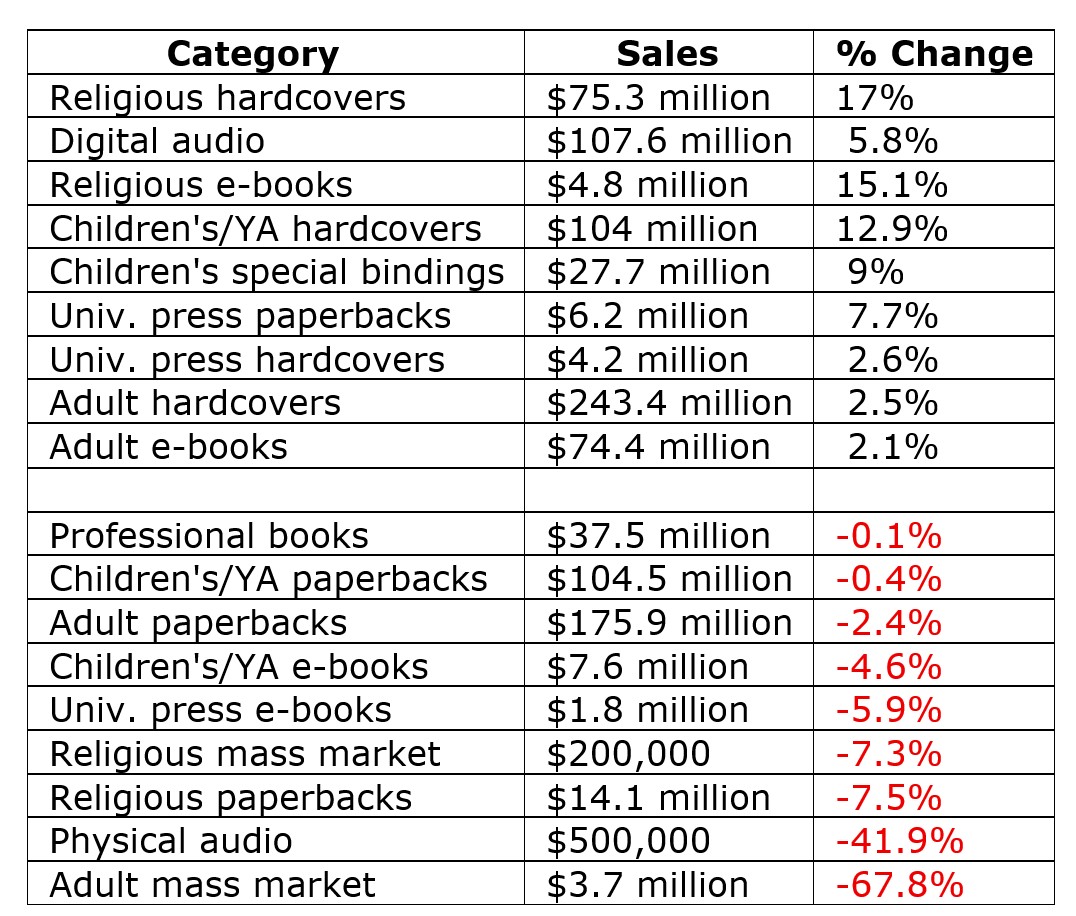


 The American Booksellers Association has released its 2025 sales survey results. Of the 382 members who responded, 73.3% said their sales last year were up from 2024,
 BINC.0903.T4.CARLAGRAYMEMORIALSCHOLARSHIP..jpg)
 Moss & Midnight opened earlier this month in Genoa, Nev.,
 The new and used bookstore opened at 810 Main St.
 Authors (and husband and wife) Michael Kardos and Catherine Pierce celebrated the launch of their books together at
 "With single digit temps in the forecast it's no better time than to grab supplies for a nice winter's hibernation,
.jpeg)
 Book you're an evangelist for:
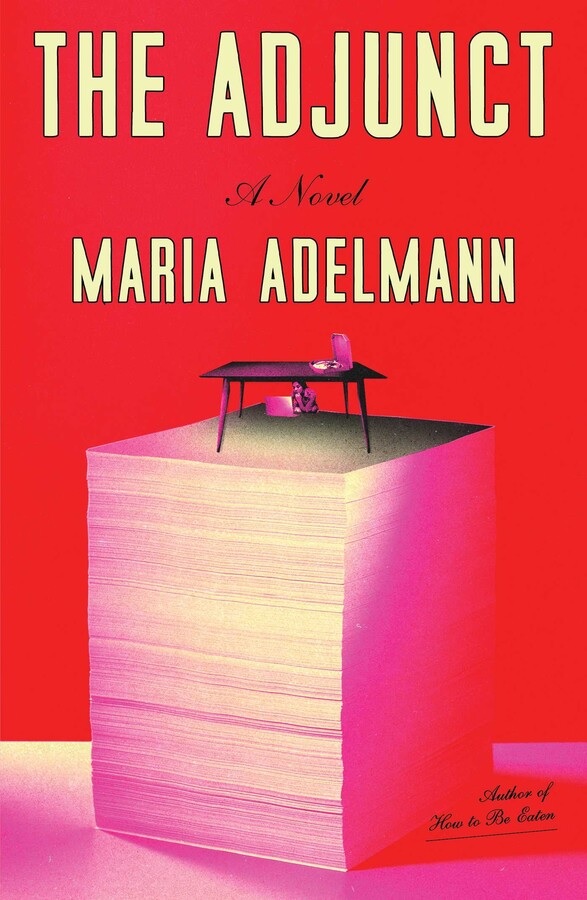 In the acknowledgments for her novel The Adjunct, Maria Adelmann cites a 2022 report noting that adjunct and contingent faculty now make up 68% of college faculty, with a quarter of those surveyed earning less than $25,000 a year. Adelmann's novel is the frank, sometimes darkly funny story of one of those teachers navigating the many challenges of her complicated personal life while struggling to survive in a system that seems engineered to ensure her failure.