The Bookstore by Michael Walek opened January 10 off-Broadway at 59E59 Theaters. Produced by New Jersey Repertory Company, the play is directed by William Carden and stars Quentin Chisholm, Ari Derambakhsh, Arielle Goldman, and Janet Zarish.
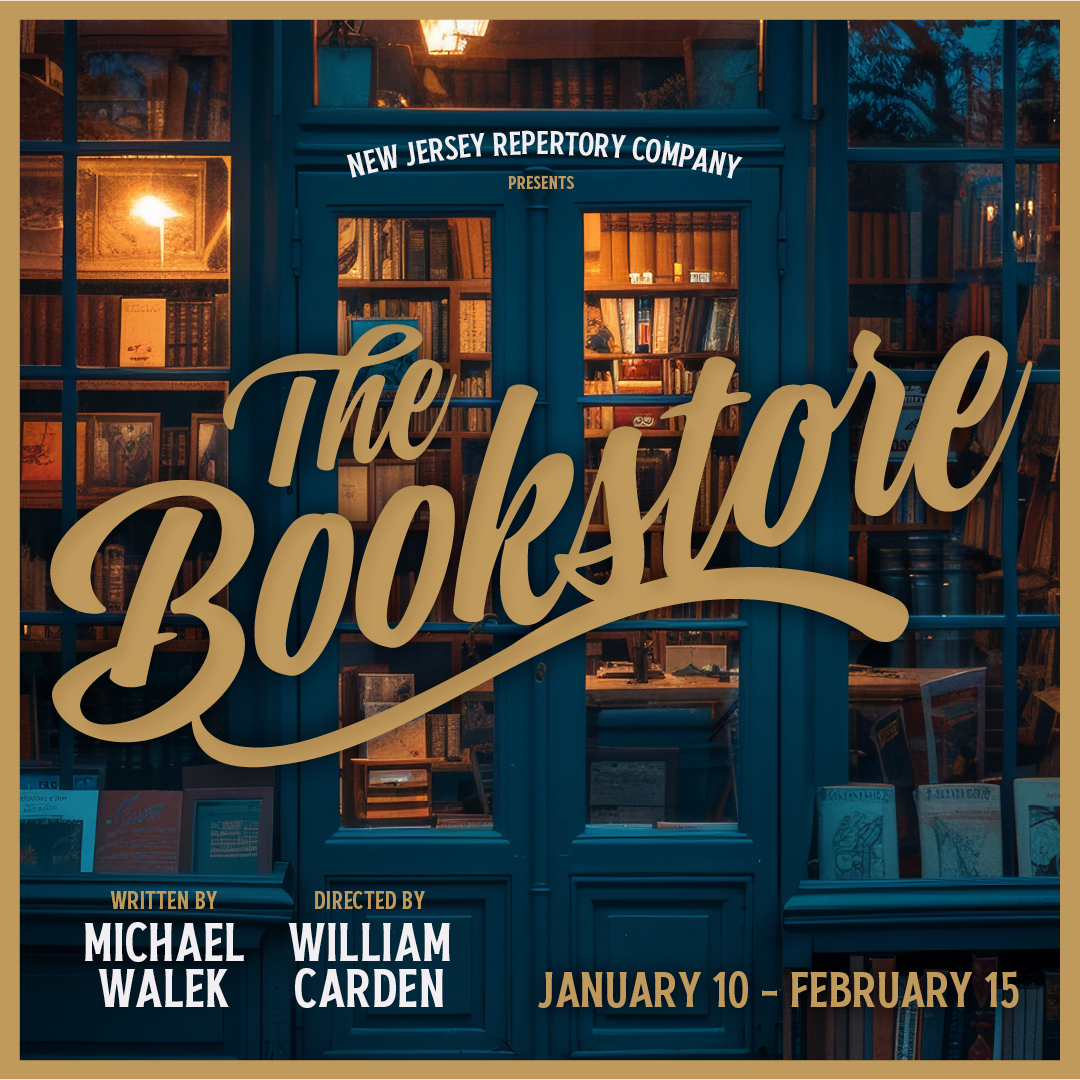 Described as a "love letter to small bookstores and the bibliophiles who make them a home," the play is about indie bookstore owner Carey, who "has a special gift for recommending the perfect book.... While trying to survive in New York City, she has created a found family of coworkers who unite over their passion for literature--and a glass of wine. This band of misfits turn the pages of their lives and learn to navigate the plot twists that are thrown their way."
The Bookstore has actual bookshop connections. Nancy Bass Wyden, owner of the Strand bookstore in Manhattan, posted on social media this week: "The Bookstore by Michael Walek is a heartwarming play about the owner and employees of a small indie bookstore. Not only do we love the subject matter, but we also love that the books on the set were sourced from The Strand! The Bookstore is playing now through Feb 15 at 59E59 Theaters, and we can't recommend it more highly."
Last month, Broadway World reported that Argosy Book Store, the Drama Book Shop, and McNally Jackson Books (Rockefeller Center) were "distributing branded bookmarks with every book purchase, bridging together their respective audiences."
These bookstores "celebrate the power of storytelling in the heart of New York City--one on the page, the other on the stage," said Val Day, artistic director at 59E59 Theaters. "In our technology-driven world, the literary and performing arts remain essential to how we connect and share our humanity. We're grateful for this partnership that highlights the enduring importance of literature, and we look forward to welcoming audiences in to see it come to life in The Bookstore."
I haven't seen The Bookstore, and probably won't have a chance to before its run ends, but I'm always fascinated by bookshop-related TV shows (witness this column and this one), movies, and plays. There is, naturally, the fact-checking aspect of the ritual ("a real bookseller would never do that!"), but also the pleasure derived from seeing your profession depicted for an audience that lives offstage, outside the shop.
Being an accomplished bookseller is itself a theatrical performance in a way. Customers enter a bookstore with certain expectations. They want to be entertained not only by browsing the books on offer, but by the whole production, performers/booksellers included. There's a stage set and dialogue and, sometimes, even a little drama or comedy.
And as bookshops continue to create and release their own video content on digital platforms (even if some booksellers aren't quite on board yet), the role of bookseller as performance artist expands beyond traditional in-store handselling and even options like social media posts and blogs.
Whatever form this strategy takes, however, it always comes down to engaging bookstore patrons at the "last three feet," a phrase I learned many years ago from the late Bob Perry, a business consultant who was also a friend and customer of the bookstore where I worked. He routinely flew all over the planet to hold seminars for, primarily, frontline and middle management staff in the service industry.
A great believer in the importance of the last three feet, he focused on that critical moment when a member of the company's staff personally, physically, psychologically, and emotionally transfers "product"--a meal, a room key, an entertainment recommendation--across the unfathomable gap between the corporation and an individual consumer/guest.
The last three feet for books is bridged when a bookseller reaches out, figuratively as well as literally, to release a book to its reader. During that moment, a bookseller represents the entire book industry to the customer. Handselling at its best is theater, a private moment between performer and audience within a magical space.
What Perry liked to describe as "performance art at the last three feet" remains the same a couple decades later, even with the addition of digital staging options. "We have so much to learn," he said to me in a series of interviews I conducted with him a couple of decades ago. "Art is happening all around us, every day, and instead of blowing it off, what's the matter with learning from the artists, from the people who are already offering their product from a mindset that's different from what we used to call quality service."
A TheaterMania review of The Bookstore noted that Jessica Parks "has designed them a cozy storefront set looking out on an idyllic West Village street scene, with Jill Nagle's natural light streaming in through the upstage windows. The shelves are fully stocked with recognizable titles, allowing the audience to play 'Where's Waldo (Emerson)?' Suzanne Chesney costumes the actors in smart girl chic. And sound designer Nick Simone cushions up the scenes, broken up by month, with elegantly selected interstitial music."
Is bookselling theater? From my first days as a bookseller, I understood that handselling was a performance--sometimes subtle, sometimes overt, always passionate--and that the bookstore sales floor was a stage set.
In The Empty Space: A Book About the Theatre: Deadly, Holy, Rough, Immediate, legendary English theater and film director Peter Brook wrote: "I can take any empty space and call it a bare stage. A man walks across this empty space whilst someone else is watching him, and this is all that is needed for an act of theatre to be engaged." A reader walks into a bookshop while a bookseller is watching, and this is "all that is needed for an act of theatre to be engaged."








 Abrams is launching akaSTORY, a commercial fiction imprint that will make its debut in January 2027 with six novels. akaSTORY's mission is to "showcase fiction that honors the art of immersive, escapist storytelling with content tailored to the digital social media age," noted the publisher, adding that in a nod to Abrams' origin as an art book publisher, akaSTORY titles will feature "elevated packaging that readers will be excited to display on their shelves and in their feeds."

BINC.0903.T4.CARLAGRAYMEMORIALSCHOLARSHIP..jpg)

 Check out this week's
  "
"
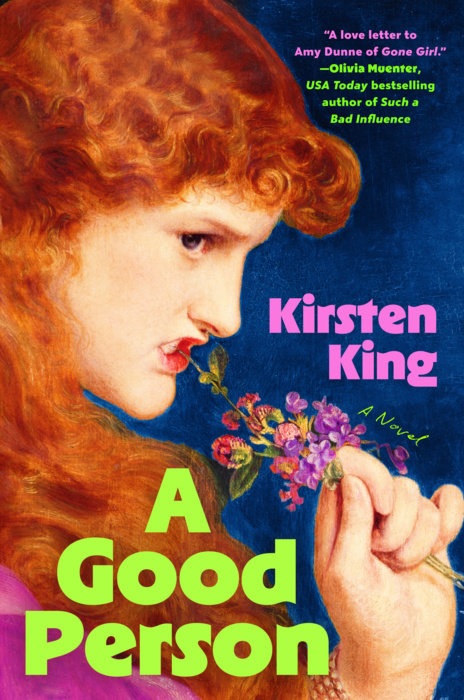 Self-preservation is a blood sport for Kirsten King's protagonist in A Good Person, a dark satire with cosmic twists about a young woman's quest to find love at any cost. King's contemporary debut catapults readers into the "neurotic" psyche of one of modern literature's most audacious narcissists and follows her through a series of mishaps that land her in the middle of a murder investigation.